FASHION FOMO WAS INVENTED BEFORE INSTAGRAM

FASHION FOMO WAS INVENTED BEFORE INSTAGRAM

FASHION FOMO WAS INVENTED BEFORE INSTAGRAM

Georg Simmel explained fashion’s psychological trap in 1904. The industry has spent the next 122 years making it faster.

Years ago, my former partner, Andrea,, a stylist,, had a surprisingly effective method for surviving PRADA.

She would look at a new collection, find something she desperately wanted and, when buying it was out of the question, console herself with a simple thought: There will be another great piece next season.

There always was.

At the time, this seemed like a practical way of negotiating an expensive enthusiasm. Looking back, it was practically applied sociology. Andrea had accidentally discovered the antidote to fashion FOMO: remembering that fashion is contractually obliged to make you fall in love again.

Georg Simmel could have told her that in 1904.

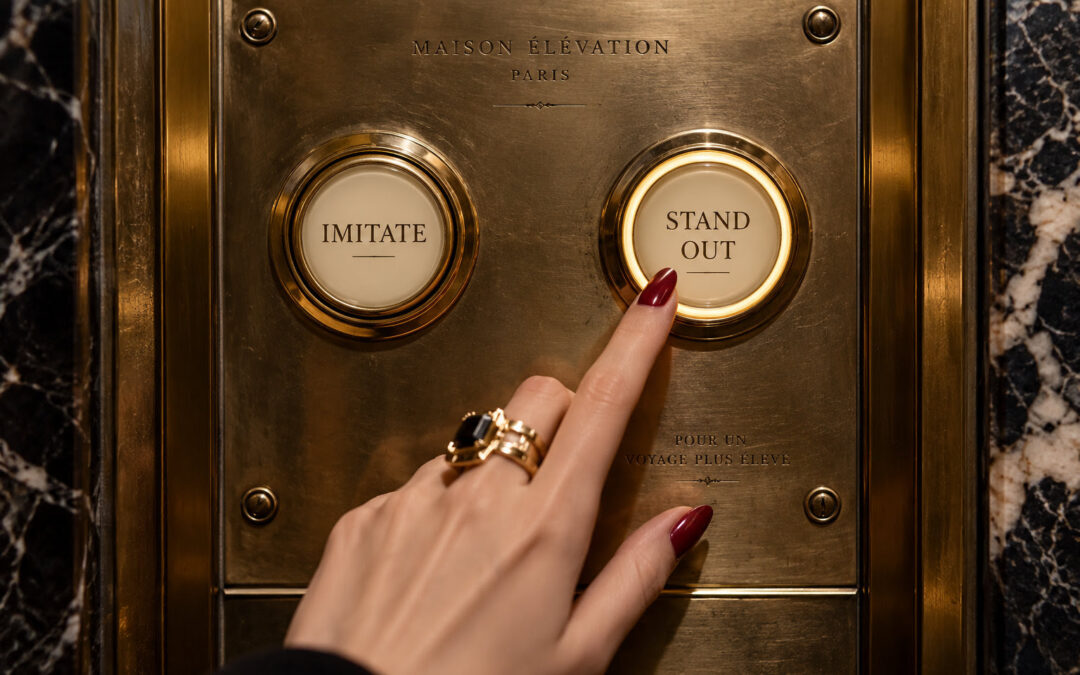
In his essay Fashion, the German sociologist described a system driven by two opposing human desires. We want to belong, and we want to distinguish ourselves. We imitate the people whose world we want to inhabit, then become uncomfortable when too many people start looking like us.

Fashion lives inside that contradiction. Luxury merely discovered how profitable it could be.

THE MACHINE HAS ONLY TWO BUTTONS

Simmel understood fashion as something much more interesting than clothing. It was a social mechanism, a way of negotiating our position among other people.

Imitation gives us reassurance. Dressing like a group tells us that we belong to it, or at least understand its codes. A suit, a sneaker, a handbag, a haircut can quietly announce tribe, class, profession, generation, taste and aspiration before anyone has said hello.
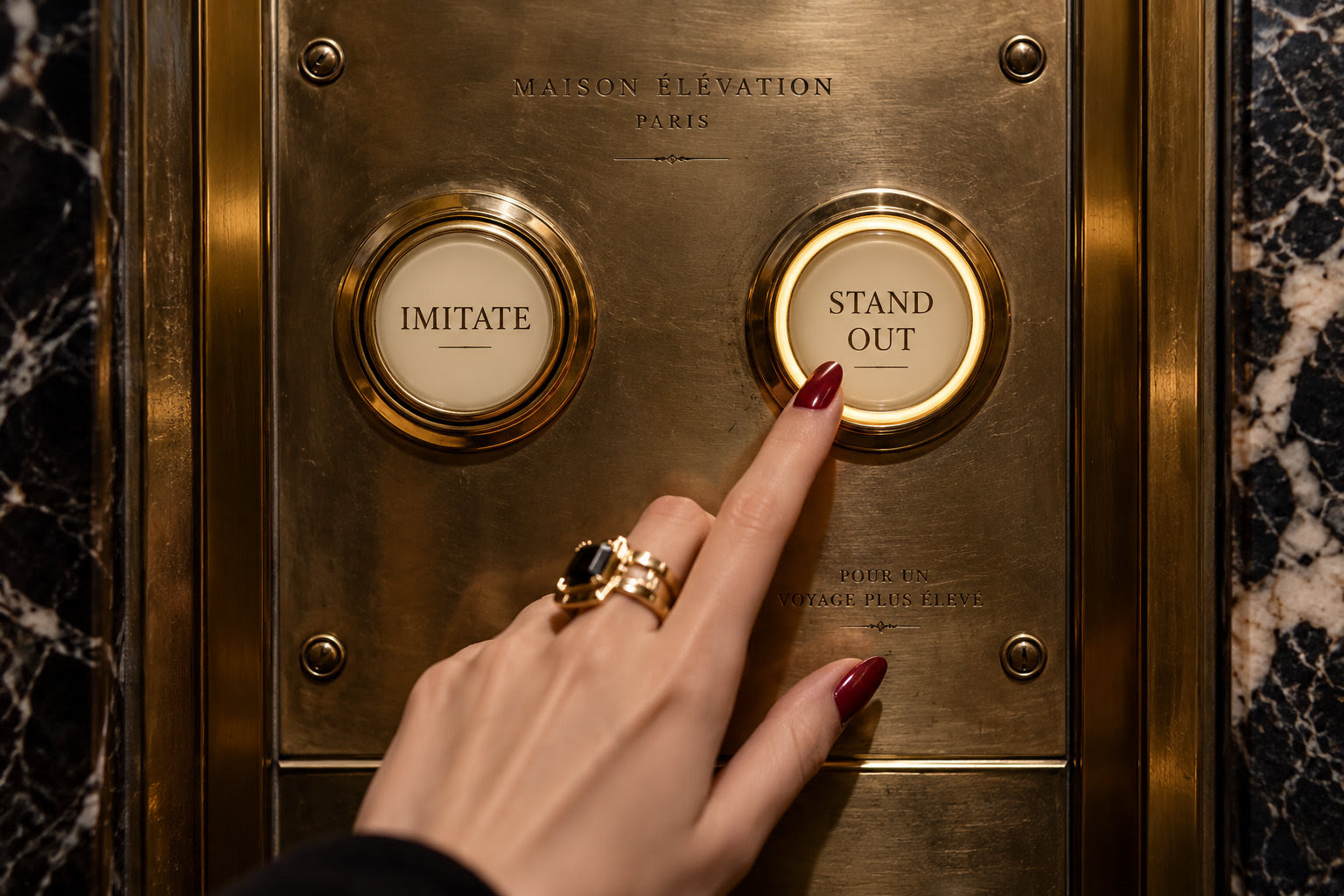
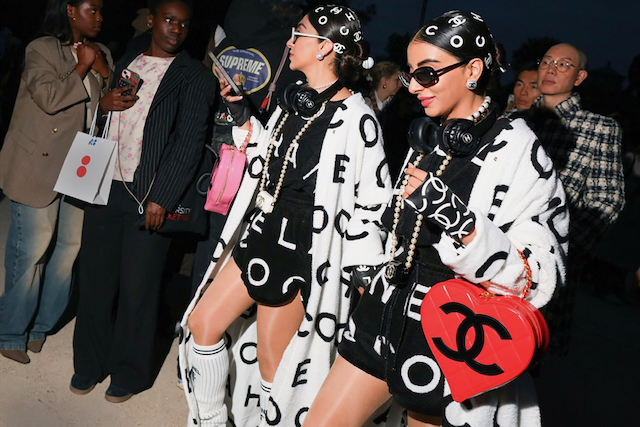
Fashion’s eternal dilemma: fit in, stand out. Please select both.

Fashion’s eternal dilemma: fit in, stand out. Please select both.

But complete conformity creates another problem. Nobody wants to disappear entirely into the wallpaper.

So we differentiate. We choose the unusual version, the difficult color, the obscure designer, the vintage piece nobody else found. We want recognition without surrendering individuality.

This is fashion’s magnificent little psychological machine: Please notice that I belong. Please notice that I am different.

Luxury has been pressing both buttons ever since.

THE PROBLEM WITH GETTING WHAT YOU WANT

Simmel’s more uncomfortable observation was that fashion contains its own mechanism of destruction.

A style acquires desirability partly because certain people have it and others do not. Then other people imitate them. The style spreads. Its success increases precisely until that success begins destroying the distinction that made it desirable.

The original group moves elsewhere.

This is sometimes reduced to “trickle-down,” but that makes the phenomenon sound almost economic. Simmel was describing something more psychological: symbolic distance. The object matters because of what it separates you from and what it connects you to.

That helps explain one of luxury’s strangest commercial problems. A handbag can become so successful that its ubiquity begins working against it. A logo can become so recognizable that recognition itself becomes vulgar. The product has achieved every conventional marketing objective and somehow damaged the thing it was marketing.

Congratulations. Everybody wants it.

Emergency meeting.

FOMO ISN’T A BUG. IT’S THE ENGINE.

This is where Andrea and her imaginary future PRADA come in handy.

Fashion FOMO persuades us that the present object is uniquely urgent. This jacket. This bag. This collaboration. This color. This season. Miss it and some tiny cultural door may close forever.

Except fashion cannot afford forever.

The entire system depends on replacing today’s urgency with tomorrow’s urgency. The miraculous object currently occupying your thoughts must eventually surrender the stage to another miraculous object, otherwise the next collection has a serious problem.

Social media did not invent this anxiety. It industrialized its delivery.

Simmel’s fashion world moved through social observation, cities, classes and social circles. Ours arrives through a glowing rectangle before breakfast. Celebrities introduce signals, influencers amplify them, algorithms measure our response, resale markets assign them fluctuating monetary values, fast fashion translates them, and within days we can watch an aesthetic move from discovery to saturation while sitting perfectly still.

The hype cycle feels faster because it is faster. But its engine is antique.

And that gives FOMO a rather wonderful weakness: the next thing is already coming.

The object telling you now or never belongs to an industry built almost entirely on again and again.

WHEN EVERYBODY BECAME THE ELITE

There is one important place where Simmel’s world no longer quite describes ours.

Fashion no longer moves neatly downward.

A teenager on TikTok can influence a luxury house. Streetwear enters couture. Vintage collectors resurrect forgotten bags. Designers excavate their own archives. Counterfeiters respond to runway collections with astonishing speed. A niche aesthetic can emerge online, be absorbed by a multinational brand, reproduced by mass retailers and declared exhausted before half the population has learned its name.

The pyramid has become a pinball machine.

Luxury now copies culture while culture copies luxury, which then copies its own archive because everybody has been copying that too. AI enters the scene trained on the accumulated visual evidence and cheerfully offers another few million variations.

Simmel’s fundamental tension survives because the hierarchy was never really the point. We still want the same contradictory things: membership and distinction.

Only now everybody can see everybody else trying to achieve them.

No wonder we’re tired.

EVEN QUIET LUXURY GOT TOO LOUD

Few recent trends demonstrate the Simmel machine as beautifully as quiet luxury.

Logos had become ubiquitous. Loud recognition no longer communicated sufficient distinction, so status performed its favorite disappearing act. The signal became subtle materials, restrained colors, impeccable cuts and objects recognizable primarily to people who were supposed to recognize them.

Luxury hadn’t abandoned signaling. It had developed a dog whistle.

Then everybody started talking about quiet luxury.

Suddenly there were explainers on how to achieve it, affordable versions of it, influencers demonstrating it and retailers merchandising it. “Stealth wealth” became one of the least stealthy ideas in fashion.

The uniform designed to distinguish its wearer from people wearing uniforms became a uniform.

Simmel wins again.

This is why the fashion cycle cannot be permanently solved by discovering the correct aesthetic. Minimalism eventually becomes conventional. Maximalism eventually becomes conventional. Logos become embarrassing until they become ironic, then archival, then cool, then ubiquitous, then embarrassing again.

Fashion does not march toward an aesthetic conclusion.

It circles.

THE LUXURY OF NOT PANICKING

Perhaps Simmel’s most useful contribution in 2026 isn’t explaining fashion. It is making fashion less frightening.

Once you see the mechanism, urgency becomes slightly comic.

That doesn’t mean abandoning fashion, desire or beautiful things. Quite the opposite. Fashion becomes more enjoyable when every new object no longer has to function as an admission ticket to the present.

You can love the PRADA and not buy the PRADA.

There will be another PRADA.

And perhaps that creates room for a different relationship with luxury. Not an impossible fantasy in which humans suddenly stop imitating each other, wanting status or enjoying novelty. Simmel would probably laugh us out of the room. But we can become more interested in objects that survive the cycle: things repaired, collected, inherited, rediscovered, worn strangely, combined incorrectly and kept long enough to accumulate a biography.

The most interesting luxury might eventually be something fashion has difficulty manufacturing on schedule: attachment.

An object you still love after the algorithm has stopped showing it to you has passed a rather more demanding test than exclusivity.

Simmel diagnosed the fashion machine 122 years ago. Since then we have added global luxury conglomerates, influencers, drops, resale platforms, dupes, TikTok, algorithms and artificial intelligence. We have accelerated nearly every component.

But the machine still has the same two buttons.

Belong.

Be different.

And whenever fashion FOMO starts whispering that this particular object, this particular collection, this particular moment cannot possibly be missed, Andrea’s little philosophy remains remarkably effective.

Relax.

There will be another great piece next season.
What Does Luxury Mean Anymore?

What Does Luxury Mean Anymore?

What Does Luxury Mean Anymore?

There was a time when the word luxury meant something remarkably specific.

It described objects that were genuinely exceptional. A yacht. A château. A Rolls-Royce. Things that demanded extraordinary craftsmanship, rare materials, specialized knowledge, and enough time to make efficiency almost beside the point. They were scarce because they were difficult to produce, not because somebody in marketing had decided scarcity would be good for the brand.

Today, luxury is everywhere.

There is luxury bottled water and luxury dog food, luxury candles, luxury gyms, luxury camping, luxury apartments and, inevitably, luxury toilet paper. The word has escaped its original definition and drifted into marketing, where it no longer necessarily describes what something is. It describes how someone would like us to perceive it.

Somewhere along the way, luxury stopped being a characteristic and became a business model.

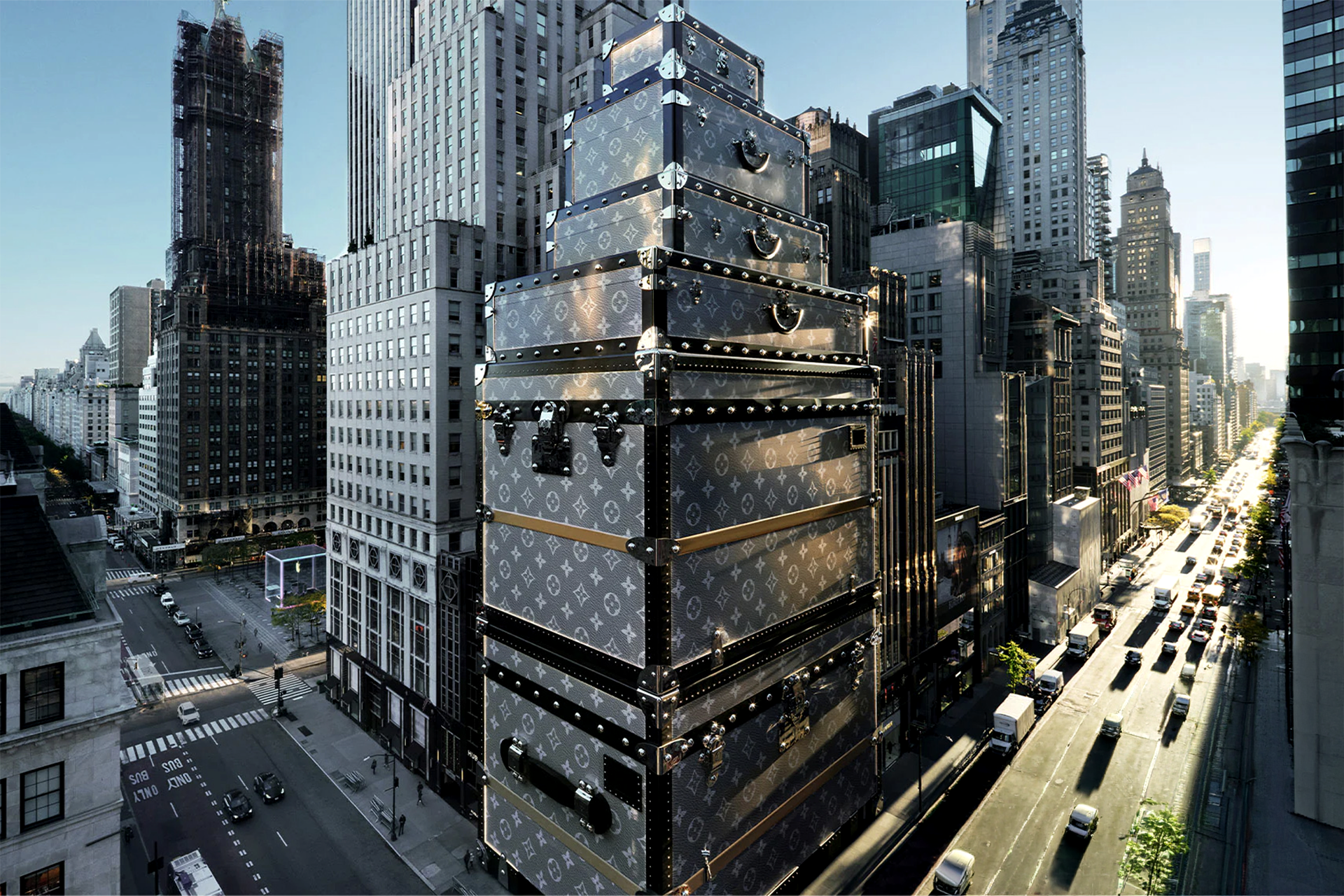
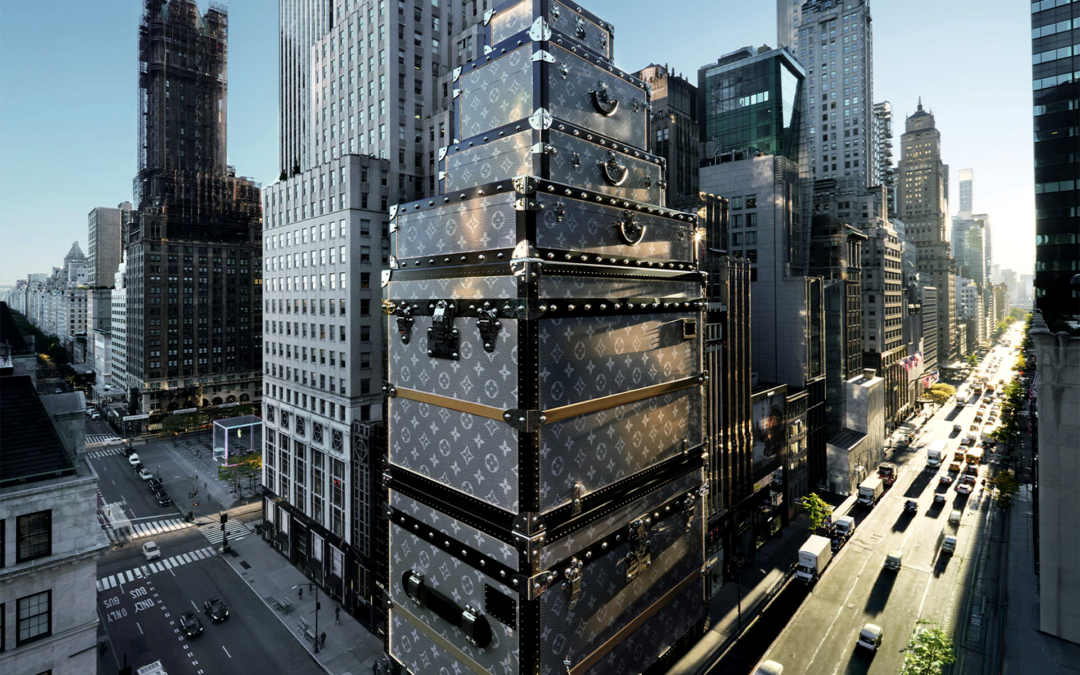
The oldest object in this building may be the most valuable. Not because of the leather. Not because of the brass locks. Because every original Louis Vuitton trunk has become intellectual property capable of generating wealth long after its designer is gone. The trunk once carried possessions. Today it carries shareholder value.

The oldest object in this building may be the most valuable. Not because of the leather. Not because of the brass locks. Because every original Louis Vuitton trunk has become intellectual property capable of generating wealth long after its designer is gone. The trunk once carried possessions. Today it carries shareholder value.

When Luxury Became an Industry

Fashion wasn't always described as luxury.

For decades, the industry spoke about couture, designer fashion, ready-to-wear, leather goods, tailoring, or simply fashion houses. Even throughout the 1980s and much of the 1990s, when ARMANI, VERSACE and CHANEL dominated magazine covers, journalists weren't constantly discussing "the luxury industry." They wrote about designers, Parisian maisons, Italian fashion, collections and clothes.

The change in language reflected a change in the business.

During the late 1990s and especially after 2000, conglomerates such as LVMH, Kering, then still PPR, and Richemont accelerated the consolidation of independent houses into increasingly powerful corporate groups. Fashion became something that could be discussed not merely in terms of collections and designers, but market capitalization, margins, geographic expansion and shareholder returns.

Investors needed a category.

Luxury became an industry.

Then it became an asset class.

Eventually, it became an adjective available to almost anyone with sufficient confidence in their pricing.

This is where the meaning begins to wobble. A genuinely extraordinary object may be expensive because it is difficult to make. A luxury product can increasingly be considered extraordinary because it is expensive.

The logic has quietly reversed.

The Vanishing Designer

Fashion still tells us that we are paying for creativity, and sometimes we are. Yet many of the products generating billions today were designed decades ago.

Coco Chanel is gone. Christian Dior is gone. Guccio Gucci is gone. Yves Saint Laurent is gone. Karl Lagerfeld is gone. Virgil Abloh is gone. Jane Birkin is gone.

Their ideas remain very much alive on the balance sheet.

This isn't an argument against the companies that inherited them. Preserving, developing and distributing a great design requires enormous organizational skill. HERMÈS doesn't simply discover a Birkin in the basement every morning and carry it upstairs. Manufacturing, quality control, retail, communication and brand stewardship all create real value.

But they create a different kind of value.

The designers created culture. The corporations learned how to compound it.

That distinction becomes increasingly important when the mythology surrounding the product begins to obscure where its value originally came from.

The Business of Managing Icons

Much of modern luxury isn't really in the business of constantly inventing new icons. It is in the business of managing extraordinarily successful old ones.

The HERMÈS Kelly traces its origins to the 1930s. The LOUIS VUITTON Speedy appeared in 1930. The GUCCI Horsebit dates to the 1950s. CHANEL's 2.55 arrived in 1955. The HERMÈS Birkin emerged in 1984 after the now-famous encounter between Jean-Louis Dumas and Jane Birkin on a flight. The Lady Dior appeared in 1995.

Decades later, these objects remain cultural and commercial engines.

That is an extraordinary achievement. It also produces an uncomfortable observation: modern luxury has become remarkably good at monetizing dead designers.

The sentence sounds harsher than the business itself. Yet it points toward something we rarely discuss. Fashion celebrates creativity relentlessly while gradually separating successful creations from the people who actually created them.

The product survives.

The author fades.

The trademark becomes immortal.

Every Artifact Has an Author

People speak about owning "a Birkin."

Rarely about Jean-Louis Dumas.

They speak about owning "a CHANEL," transforming the name of a woman who died more than half a century ago into shorthand for an object, a company and an idea of status.

That is what successful brands are designed to do. They outlive their creators.

But every artifact has an author.

Somewhere, someone imagined the shape, solved the problem, drew the first sketch, rejected another one, changed the proportions, obsessed over a clasp or a handle and eventually gave physical form to something that previously existed only in the imagination.

Our culture increasingly celebrates the trademark while forgetting the mind behind it.

Which reveals a rather delicious contradiction in the industry's obsession with scarcity.

Fashion's real scarcity has never been handbags.

It is great designers.

A Birkin can be manufactured again tomorrow. It can be resold tomorrow. It can be copied tomorrow, often with unnerving accuracy.

Another Yves Saint Laurent cannot.

When Price Becomes the Product

None of this means expensive things are inherently absurd.

Some objects deserve extraordinary prices. Handwork costs money. Exceptional materials cost money. Small production runs cost money. Maintaining skills that take decades to master costs money. There is something worth defending in a world where human expertise increasingly competes with industrial efficiency.

But price and value are not the same thing.

The modern luxury machine has become exceptionally sophisticated at collapsing the distinction between them.

Price itself can create desire. Raise it high enough and the object begins communicating something independent of its material qualities. It signals access, purchasing power and membership. Add controlled distribution, waiting lists, celebrity visibility and a convincing story about scarcity, and price stops merely reflecting the product.

Price becomes part of the product.

This helps explain one of contemporary luxury's stranger achievements: consumers increasingly defend high prices on behalf of the companies charging them.

The markup becomes evidence of desirability.

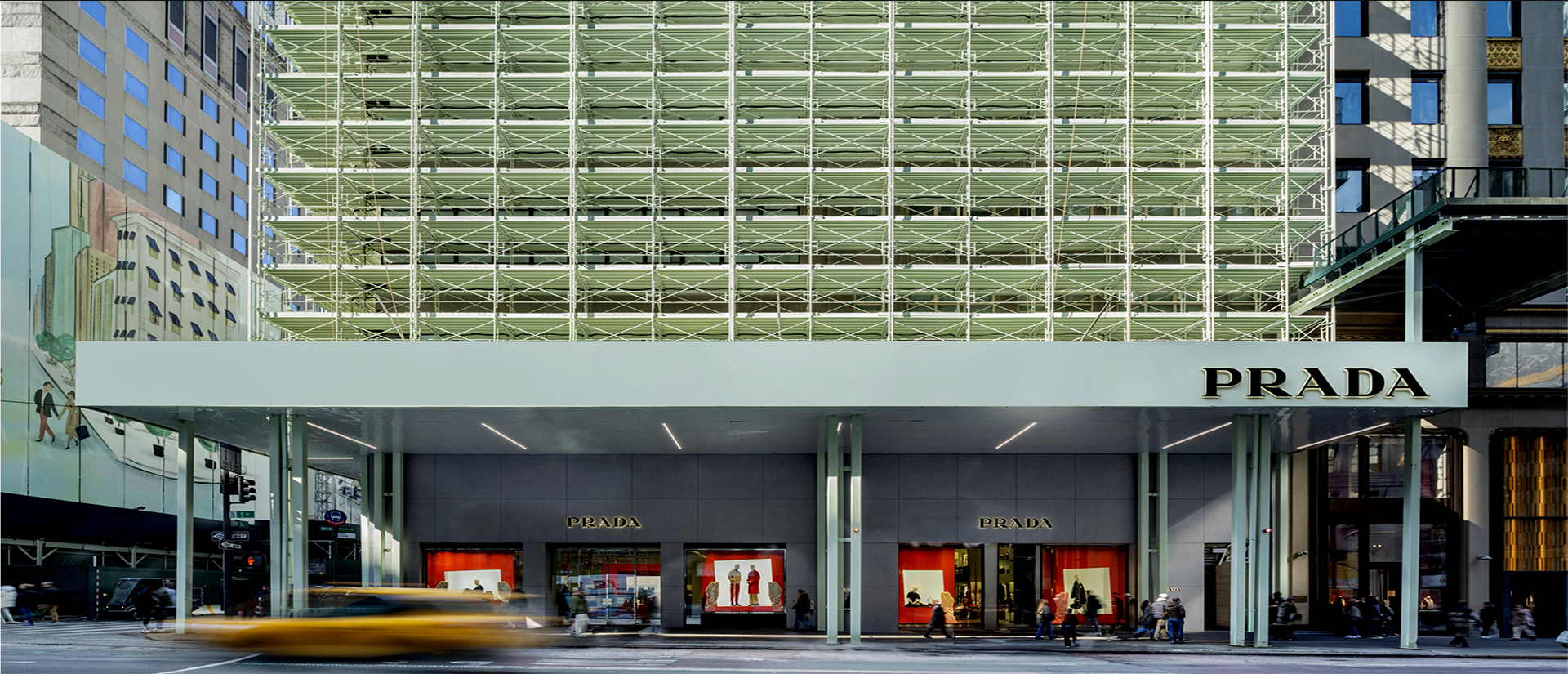
Few locations illustrate luxury's transformation better than PRADA's New York flagship, occupying the base of the Goldman Sachs headquarters. It feels less like a fashion boutique than a physical merger between aesthetics and finance. A long way from Milan's Galleria Vittorio Emanuele II, not geographically. But philosophically.

Few locations illustrate luxury's transformation better than PRADA's New York flagship, occupying the base of the Goldman Sachs headquarters. It feels less like a fashion boutique than a physical merger between aesthetics and finance. A long way from Milan's Galleria Vittorio Emanuele II, not geographically. But philosophically.

The Assetization of Desire

The transformation of luxury mirrors something much larger happening across modern capitalism.

Objects increasingly matter not only for what they are, but for what they might become financially.

Handbags become investments. Watches become portfolios. Sneakers acquire markets. Homes become financial instruments. Art becomes collateral. Limited editions become speculative vehicles almost before anyone has had time to enjoy them.

Even the language of consumption has changed.

People discuss "investment pieces." They track resale values. They calculate appreciation. They justify purchases according to what they might recover later.

The pleasure of owning something becomes entangled with the reassurance that somebody else may eventually want it even more.

Consumption quietly begins to resemble portfolio management.

And once that happens, the object itself starts disappearing beneath its financial shadow.

The market is no longer simply selling a beautiful handbag.

It is selling the possibility that desire itself can appreciate.

What Happens When Everything Becomes an Asset?

This is where luxury becomes interesting beyond fashion.

The same logic now runs through housing, art, watches, sneakers, collectibles and increasingly almost anything capable of acquiring scarcity, narrative and a secondary market.

A home can be somewhere to live and an appreciating asset. A painting can be something to look at and a store of wealth. A handbag can carry your belongings while simultaneously functioning as a small leather financial instrument.

There is nothing inherently wrong with any of this. Objects have always carried economic value.

What has changed is the degree to which financial value begins to dominate every other kind.

Craftsmanship becomes interesting because it supports price. Scarcity becomes interesting because it protects price. Heritage becomes interesting because it legitimizes price. Culture itself becomes useful because culture can be monetized.

Eventually we risk forgetting that these things once had other purposes.

Fashion was worn.

Homes were lived in.

Art was looked at.

Objects were used.

Luxury or Financialization?

Perhaps the greatest illusion of contemporary luxury is that it has become increasingly exclusive.

The opposite may be closer to the truth.

Luxury didn't simply become more exclusive.

It became more financial.

The extraordinary achievement of the modern luxury industry wasn't inventing another handbag. It was discovering how to take creativity, heritage, scarcity, identity and desire and organize them into assets capable of producing remarkably durable returns.

That doesn't make the objects meaningless. Some remain beautifully designed, extraordinarily made and culturally important. Nor does it make desire foolish. Wanting beautiful things is one of humanity's more persistent habits, and probably one of its more enjoyable ones.

But it does change the question.

Instead of asking whether something is luxury because it is expensive, perhaps we should ask what remains when we remove the price, the logo, the resale value, the waiting list and the investment narrative.

Is the object still extraordinary?

Do we still want it?

Would we recognize its value if nobody else could see us carrying it?

That may be where luxury begins again.

The Quantum Mechanics of Status

The Quantum Mechanics of Status

The Quantum Mechanics of Status

An essay on luxury, ego, and the strange power of being seen.

Every luxury brand tells you to stand out, while every spiritual teacher, in their own way, tells you to disappear. Somewhere between HERMÈS and enlightenment lies one of the strangest ideas in modern physics.

In quantum mechanics, particles don't behave quite the way our everyday intuition expects. Under certain experimental conditions, they display both wave-like and particle-like behavior. Exactly how to interpret that remains one of the great debates of physics, but the language surrounding "observation" has fascinated philosophers for decades. Whether or not it tells us anything about consciousness is another question entirely, but it certainly tells us something about Instagram.

The Observer Arrives

Imagine that human beings are naturally more like waves than particles: fluid, changing, connected, not entirely separate from everything else. When nobody is judging us, we drift through life remarkably peacefully. We wear old sneakers, sing badly in the shower, dance with our children, scratch our stomachs, and simply exist.

Then somebody starts looking.

Suddenly, the wave collapses into a particle. A very specific particle. One wearing a ROLEX, driving a PORSCHE, holding a rare Birkin, living in the right neighborhood, and owning the correct bottle of wine.

The observer has arrived, and now the performance begins.

Luxury has become less about beautiful objects than about surviving observation. The handbag isn't speaking to you; it's speaking for you, not because leather has magical powers, but because someone else is watching.

That may be why status symbols work best in cities full of strangers. The fewer people who actually know you, the harder your possessions have to introduce you. The watch becomes your résumé, the logo becomes your personality, and the car becomes your autobiography.

Status, beautifully choreographed. Fashion has always been part clothing, part performance, and entirely more interesting because of it.

Status, beautifully choreographed. Fashion has always been part clothing, part performance, and entirely more interesting because of it.

The Attention Economy

Social media has industrialized this entire process. We are now observed continuously—every meal, every vacation, every purchase, every opinion, every morning coffee. The observer never leaves the room.

Naturally, the particles become increasingly elaborate.

Luxury marketing understands this better than almost anyone. It isn't really selling handbags; it's selling the feeling of existing more vividly inside somebody else's imagination. You don't buy visibility so much as the hope that someone else's observation will complete the version of yourself you've been assembling.

Today's buzzword is the attention economy, but perhaps that's simply another name for the oldest economy of all: the economy of being seen.

Luxury as Performance

None of this means there is anything wrong with luxury. There is nothing wrong with beautiful clothes, nothing wrong with craftsmanship, nothing wrong with loving fashion, collecting watches, or appreciating a perfectly designed object. Humans have always decorated themselves; we painted caves long before we built shopping malls.

The interesting question is not what we wear, but who is wearing it. Is it an expression of ourselves, or is it a costume for the observer?

There is a subtle but profound difference between having style and performing status. One feels playful, the other feels strangely exhausting.

The problem begins when the Porsche starts driving you.

Perhaps that is why luxury occasionally starts feeling heavy—not because the objects weigh more, but because the identity attached to them does.

Returning to the Wave

Spiritual teachers have been making the opposite argument for centuries. Eckhart Tolle writes about Presence, the awareness that exists before the ego begins performing for the world. Michael Singer calls it the personal self. Alan Watts delighted in laughing at the endless performance of the ego. Years ago, Stuart Wilde introduced a metaphor that immediately opened my eyes, suggesting that humanity spends much of its time collapsing itself into fixed identities, forgetting that our natural state may be something far more fluid.

Different vocabulary, remarkably similar destination.

The less obsessed we become with being observed, the more peaceful life becomes. Perhaps enlightenment is simply returning to the wave—not disappearing, not withdrawing from society, but no longer requiring every room to confirm who you are.

Quiet Luxury

Ironically, the genuinely rich often seem the least interested in looking rich. Fashion now calls it quiet luxury, but perhaps quiet luxury is simply what confidence looks like. The absence of ego doesn't mean becoming blind to beauty; quite the opposite, it makes us more sensitive to beauty that doesn't need applause.

A beautifully cut jacket, a perfectly made chair, a Japanese teacup, a forest after the rain, a sunset that has never checked Instagram—beauty doesn't disappear. Performance does.

Quiet confidence rarely needs a logo.

Which raises an uncomfortable possibility: maybe luxury was never the expensive object at all. Maybe the real luxury is existing without constantly collapsing into somebody else's expectations.

That doesn't require a Birkin. It only requires remembering that we were waves long before we became particles.

And perhaps that is the greatest irony of all: the more desperately we try to be seen, the less we actually see.

The moment we stop performing for the observer, style becomes play again, fashion becomes creativity again, and luxury quietly returns to what it always had the potential to be—not a proof of who we are, but just another beautiful thing in the room.

Pop-Ups: The Store That Discovered It Was Better to Die Young

Pop-Ups: The Store That Discovered It Was Better to Die Young

Pop-Ups: The Store That Discovered It Was Better to Die Young

There was a moment in New York, somewhere around the middle of the 2000s, when shops began behaving strangely.

They appeared overnight in empty storefronts, warehouses and forgotten corners of downtown. There might be clothes inside. There might be art. There might be a party. There was often no particularly convincing sign. And just when you had figured out what the place was, it disappeared.

I was living in New York when pop-up fever began spreading through fashion, and I remember the idea feeling genuinely new. Not revolutionary in the French sense, perhaps, but revolutionary enough for retail: what if the cleverest thing you could do with a store was close it?

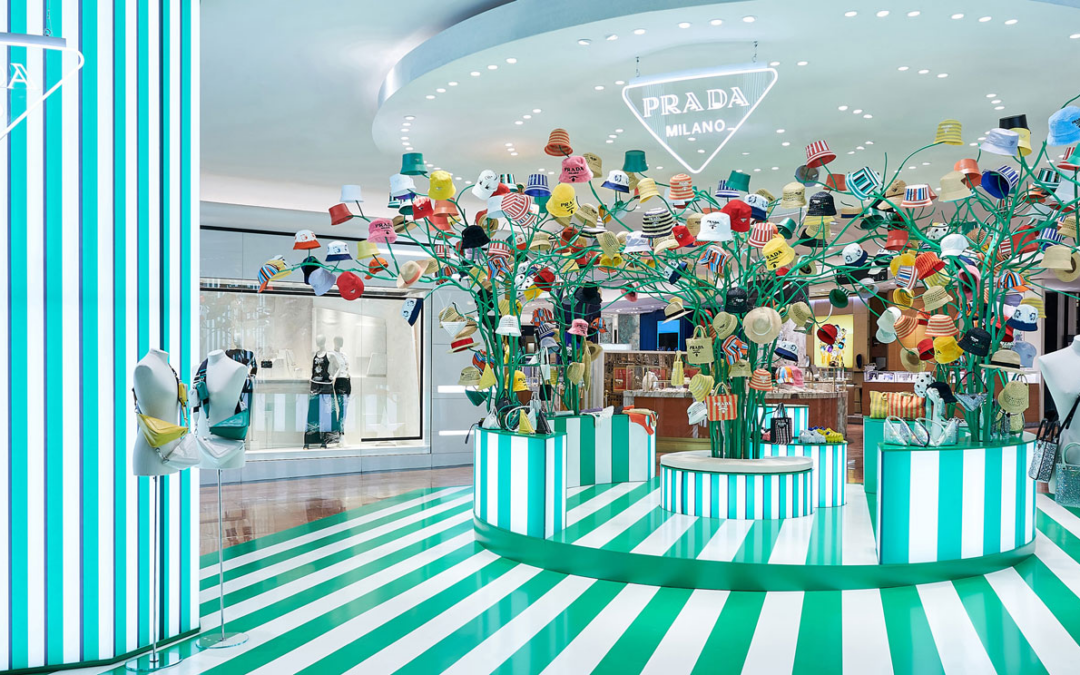
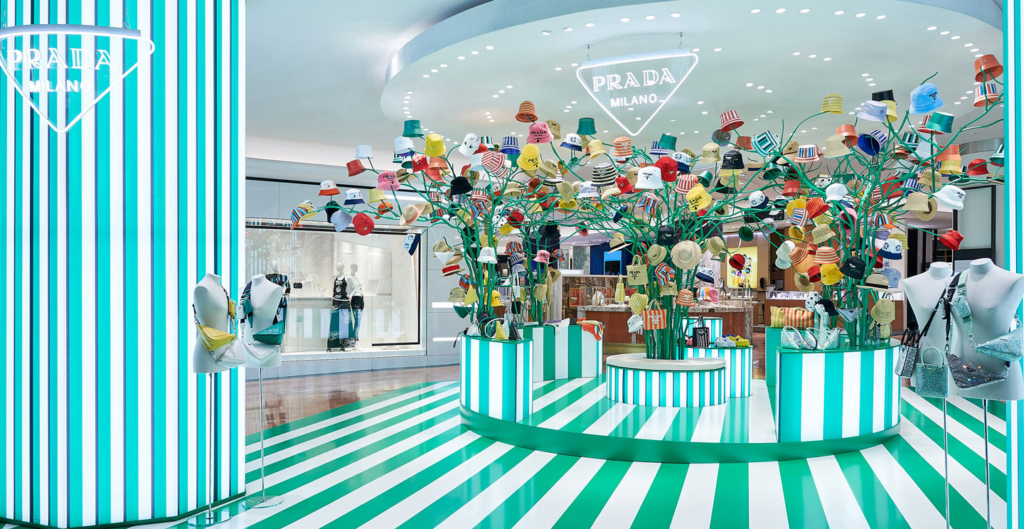
Colorful Prada pop-up store featuring a striped interior and sculptural display of hats and accessories.

When the store becomes more collectible than the collection.

This was before Instagram, before every coffee shop had a “moment,” before immersive experience became something marketing departments said without embarrassment.

The pop-up was retail with an expiration date.

And that expiration date turned out to be extremely good for business.

Before the Pop-Up Became a Pop-Up

Temporary commerce, of course, is ancient. Markets, fairs, bazaars, Christmas stalls and traveling merchants had been appearing and disappearing for centuries. Humans understood scarcity long before marketing consultants discovered PowerPoint.

But the modern fashion pop-up was something different.

It wasn't temporary because it had to be.

It was temporary because temporary was cool.

The decisive moment came in 2004, when Rei Kawakubo's COMME DES GARÇONS opened its first Guerrilla Store in Berlin. It occupied a former bookshop away from the conventional luxury-shopping circuit. The old interior was largely left alone, the renovation budget was reportedly only about $2,500, and the store came with a deliciously irrational rule: it would close after a year even if it was successful.

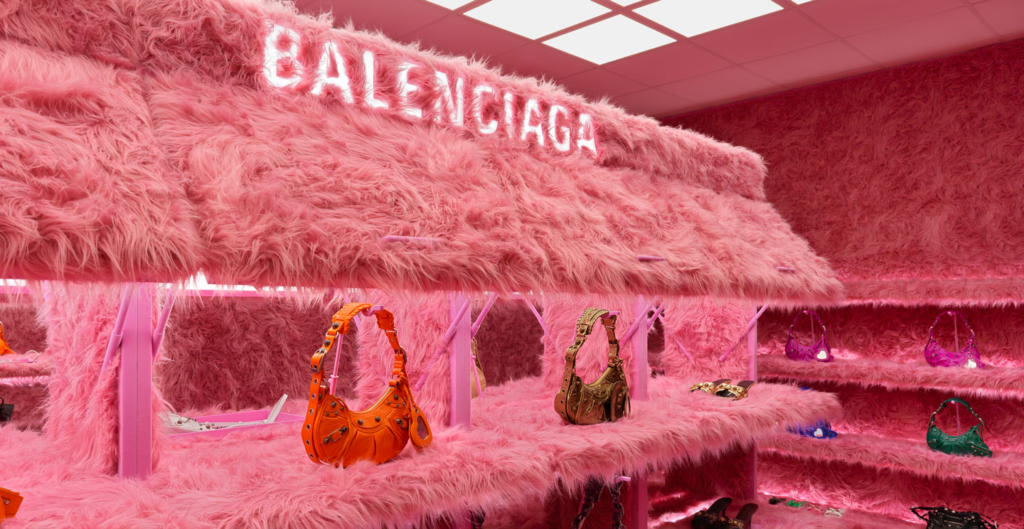
Balenciaga pop-up store covered in pink faux fur, displaying colorful handbags.

Subtlety was apparently not invited.

Think about how radical that was.

Luxury retail had spent decades perfecting permanence. Marble. Brass. Monumental staircases. Addresses that sounded like inherited titles. A flagship was supposed to announce: WE ARE HERE.

COMME DES GARÇONS said: WE'RE HERE FOR A BIT. FIND US.

The Guerrilla Stores subsequently appeared in cities including Barcelona, Stockholm, Warsaw, Singapore, Athens, Beirut and Reykjavík, generally occupying marginal or unexpected locations rather than conventional luxury districts. Advertising was deliberately limited. Interiors could remain raw. Word of mouth did much of the work.

It was anti-retail retail.

Naturally, retail loved it.

Then New York Caught the Virus

By roughly 2005, I remember temporary retail becoming part of the New York fashion conversation.

The timing was perfect. Downtown Manhattan still had enough odd spaces to make discovery possible, fashion was becoming increasingly intertwined with nightlife and art, and the Internet was powerful enough to spread a rumor but not yet powerful enough to tell you everything before you arrived.

That distinction matters.

You could still discover things.

A strange shop on an unfamiliar block had information value. You went inside because you didn't already know precisely what was inside.

The pop-up borrowed something from New York nightlife too. The best clubs had always understood that accessibility was the enemy of desire. A difficult door, an obscure address, a party you heard about from somebody who heard about it from somebody else: inconvenience could manufacture value.

Retail simply stole the velvet rope.

By 2009, the experiment had become an epidemic. Vogue was writing about the proliferation of pop-ups as GUCCI prepared a sneaker project with Mark Ronson in New York, Rachel Roy planned a temporary SoHo store, Stella McCartney popped up for three days in East Hampton, eBay briefly occupied East 57th Street, and Prada opened a five-month temporary boutique in Paris.

The guerrillas had been joined by the imperial army.

Luxury Discovers That Rent Can Be Content

This is where the pop-up became much more interesting than a temporary shop.

Brands realized they weren't renting retail space.

They were renting attention.

A conventional store has a terrible marketing problem: tomorrow it will still be there.

A pop-up arrives with its own headline.

NOW OPEN.

Immediately followed by:

CLOSING SOON.

Retail had accidentally invented a machine that created both novelty and scarcity.

The store became campaign, billboard, press release, event venue, product launch, party backdrop, social currency and, somewhere toward the bottom of the list, a place where one could purchase a handbag.

That hierarchy would become increasingly important.

The heavy hitters understood early that modern consumers crave exclusivity and surprise, and nothing delivers that quite like a limited-time boutique that might be gone tomorrow. LOUIS VUITTON, DIOR CHANEL, GUCCI, PRADA, HERMÈS and FENDI all learned to treat temporary retail as a form of brand theatre. Their pop-ups were not merely smaller versions of permanent boutiques. They were tightly edited worlds, built around a single idea, a capsule collection, a collaboration or a city-specific fantasy.

A handbag available everywhere is merchandise.

A handbag available for eleven days in a temporary shop in Tokyo that your friend discovered before you did is suddenly a cultural achievement.

Same bag.

Better mythology.

LOUIS VUITTON has repeatedly turned temporary spaces into architectural statements, from monogrammed installations to immersive exhibitions and city-specific launches. Dior has used pop-ups to transform its codes into elaborate environments of flowers, toile, stars and couture-scale spectacle. GUCCI has made the temporary boutique feel like a travelling extension of its eccentric universe, mixing fashion, art, music and collectible objects. PRADA, meanwhile, has always understood the power of a controlled, slightly surreal environment in which the product feels less displayed than staged.

These brands elevated the pop-up from retail tactic to performance art. The store became a set, the customer became part of the cast and the purchase became a souvenir of having entered the scene at precisely the right moment.

The Store Becomes a Stage Set

Then social media arrived and poured gasoline on the concept.

The early pop-up wanted you to find it.

The next generation wanted you to photograph yourself finding it.

Walls became backdrops. Mirrors acquired slogans. Giant handbags appeared. Flowers multiplied. Neon proliferated with alarming speed. Somewhere, inevitably, there was a chair nobody was supposed to sit on.

The pop-up had evolved from guerrilla retail into content architecture.

This wasn't necessarily a bad thing.

Physical retail had spent years worrying that e-commerce would kill it. Instead, e-commerce liberated the store from having to behave entirely like a store.

You could buy the product online.

So what was the physical space for?

Drama.

A temporary shop could do what a permanent store often couldn't justify. Build something absurd. Occupy an abandoned garage. Install a giant sculpture. Sell one capsule. Invite a chef. Host a DJ. Stay for four days. Leave.

Tommy Hilfiger eventually took the format almost literally on the road. For the 2011 Prep World project, the brand constructed a Cape Cod-style beach cottage in New York's Meatpacking District, opened it for only four days, then moved the concept through cities including London, Stockholm, Los Angeles, Madrid and Milan.

A store had become touring entertainment.

Retail was starting to look suspiciously like rock and roll.

The most extravagant examples now feel closer to temporary architecture than conventional shopping. In Shanghai, LOUIS VUITTON has staged launches on boats and floating platforms, turning the Huangpu River into a moving storefront and the skyline into a backdrop. A customer is no longer simply entering a boutique; they are boarding the brand.

Elsewhere, the format has become deliberately playful. PRADA has created temporary cafés and patisseries around its visual language. LOUIS VUITTON has explored pop-up cafés and chocolate boutiques where monogrammed packaging becomes part of the collectible. Fendi has brought its Roman glamour into temporary bars, beach clubs and hospitality spaces. Gucci has turned ice cream, cocktails and souvenirs into extensions of its fashion universe. Even the humble ice cream shop can become a luxury campaign when the walls, uniforms, flavours, packaging and queue have all been styled as one coherent fantasy.

The product may be a handbag, a sneaker, a lipstick or a scoop of gelato.

The real product is the story people tell about having been there.

FOMO, Now Available in Several Sizes

Of course, underneath all the creativity sits one of capitalism's oldest buttons:

You can't have this forever.

Pop-ups compress desire.

A normal shop allows deliberation. You can think about it. Come back Saturday. Check the website. Ask your friend. Have lunch.

The pop-up whispers:

Saturday? Darling, we may no longer exist.

Suddenly procrastination becomes expensive.

Limited editions intensify the effect. A product available only in a particular city, collaboration or temporary location carries a little certificate of participation. You didn't merely buy it.

You were there.

This is particularly potent in luxury, where the object has never been the entire product. Access, knowledge, timing and belonging are part of the package.

The pop-up simply makes that machinery visible.

A DIOR beauty pop-up might offer a limited shade, a personalised service and a room designed for photographs. A CHANEL installation might turn a fragrance launch into a black-and-white cinematic set. A GUCCI boutique might combine a capsule collection with a café, a DJ and a wall of objects that exist mainly to be photographed. The customer is not just shopping for a product. They are collecting evidence of proximity.

That is the genius of the modern luxury pop-up. It makes exclusivity feel physical.

Then Everybody Popped

Inevitably, an idea invented partly as an escape from standardized retail became standardized retail.

Fashion popped.

Beauty popped.

Sneakers popped.

Restaurants popped.

Artists popped.

Technology popped.

Streaming services popped.

Brands that barely existed popped up to announce that they existed.

Brands with thousands of stores opened temporary stores to experience the thrill of pretending they didn't.

And somewhere along the way, the phrase POP-UP EXPERIENCE became capable of describing almost anything involving a vacant room, three vinyl decals and a beverage sponsor.

Such is the lifecycle of every good cultural idea.

First the outsiders invent it.

Then fashion discovers it.

Then luxury perfects it.

Then marketing industrializes it.

Then somebody puts a QR code on it.

The difference is that the best luxury brands still understand the importance of restraint. A truly effective pop-up does not throw every idea into one room. It chooses a world and commits to it. The styling has to be precise, the product edit narrow, the service choreographed and the exit inevitable.

Opulence works best when it feels temporary enough to be dangerous.

The Sustainability Problem

Pop-ups are frequently presented as a lighter, more sustainable alternative to conventional retail, and sometimes they genuinely can be.

Existing spaces can be reused. Fixtures can be modular. Brands can test demand before committing to permanent locations. Independent designers can meet customers without financing a cathedral of marble.

But temporary does not automatically mean sustainable.

Build an elaborate interior for fourteen days, fly staff and products around the world, manufacture mountains of branded installation material and throw half of it away afterward, and the environmental halo becomes rather faint.

A sustainable pop-up has to be designed to disappear intelligently.

Reuse the space.

Reuse the furniture.

Reuse the materials.

Move the installation.

Leave as little behind as possible.

The original COMME DES GARÇONS guerrilla idea suddenly looks remarkably contemporary again: spend very little, alter very little, use what is already there, create cultural value rather than decorative landfill.

Sometimes the future of retail looks suspiciously like Berlin in 2004.

And Now We Have the Internet

The strangest thing about the pop-up is that e-commerce should have killed it.

Instead, e-commerce made it stronger.

The Internet gave us infinite shelves, infinite opening hours, infinite comparison and infinite convenience.

Which also means it removed something shopping used to provide naturally:

the accident.

You search for a black handbag online and the algorithm gives you black handbags.

Efficient.

Useful.

Deadly boring.

Walk through a city and encounter a strange temporary store you didn't know existed, and something entirely different happens. Curiosity interrupts intention.

You enter without knowing exactly what you're looking for.

That is an increasingly rare commercial condition.

And perhaps a valuable one.

The irony is that the more digital shopping becomes, the more extravagant the physical interruption can be. A boat in Shanghai, a Dior garden, a Louis Vuitton café, a Gucci ice cream shop, a Prada installation in a former industrial space: these places do not compete with the Internet by offering more inventory. They compete by offering something the Internet cannot quite reproduce.

A sense of arrival.

The Permanent Power of the Temporary Store

Twenty years after those early guerrilla experiments, the pop-up is no longer a novelty. It is part of the basic grammar of modern retail.

But the best ones still retain a trace of the original idea.

They don't simply sell.

They interrupt.

They occupy an unexpected place, create a temporary world, invite people inside and disappear before familiarity has time to become indifference.

That is why the pop-up survives every retail apocalypse announced on LinkedIn.

It understands something permanent stores occasionally forget:

shopping should occasionally be fun.

Not frictionless.

Not optimized.

Not personalized by an algorithm that has been following you around the Internet since Tuesday.

Fun.

A little unpredictable. A little theatrical. Slightly unnecessary.

You walk around a corner.

Something is there that wasn't there yesterday.

You go inside.

Maybe you buy a purse.

Maybe you eat an ice cream beneath a giant logo, board a boat dressed as a boutique or stand in line for a product that will be impossible to find next week.

And then it vanishes.

That is not bad retail.

That is show business.

From Paris Hat Shop to Legal Powerhouse: CHANEL’s Evolution into a Trademark Titan

From Paris Hat Shop to Legal Powerhouse: CHANEL’s Evolution into a Trademark Titan

Style Companion

From Paris Hat Shop to Legal Powerhouse: CHANEL’s Evolution into a Trademark Titan

by Thea Elle | Sep., 16, 2025 | Couture Commentary

Coco Chanel launched her first boutique on Rue Cambon in 1910 with little more than talent and tenacity. She didn’t file trademarks; she didn’t need to. Fashion was a playground where copying was flattery and lawyers were scarce. Today, the story is reversed. The CHANEL name and those mirrored C’s are protected with military-grade vigilance. The same label that once upended conventions with boyish cuts and jersey fabric now polices handbag shapes and brand mentions. It’s the ultimate luxury paradox: the house that began as a free spirit has become fashion’s most formidable guardian

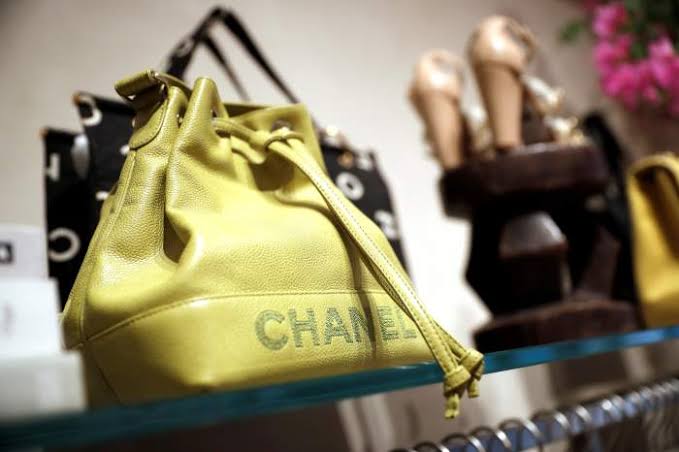
A soft, casual spin on luxury — the Chanel bucket bag blends everyday practicality with iconic style.

When Fashion Was a Free-for-All

Turn-of-the-century Paris was a hotbed of creative larceny. Sketches changed hands by candlelight, perfume formulas were shared like secrets at a salon, and the term “intellectual property” might as well have been a punchline. Gabrielle “Coco” Chanel entered the fray in 1910 with a small hat shop on Rue Cambon and an even bigger appetite for reinvention.

If you're a luxury brand enthusiast on a budget, check out CRIS & COCO! You will only find better deals, with up to 90% off on authentic, high-quality products. Trust our quality satisfaction guarantee and 99 % satisfied customers since 2018 speak for themselves. Take advantage of this hidden gem!

Her pared-down boaters and effortless jersey dresses were lightning rods in a city still drunk on Edwardian frills. Rivals copied freely, but Chanel stayed unbothered. For her, the true patent was poise. She trafficked in an attitude—ease, liberation, a sly rebellion—that no legal filing could capture. In a world where fashion was the public domain, Coco made originality feel inevitable.

The Perfume That Changed Everything

By 1921, Coco Chanel had conquered clothes, but it was a fragrance that would crown her empire. Partnering with perfumer Ernest Beaux, she unveiled  CHANEL No. 5, a minimalist aldehydic blend that smelled like the future. The perfume’s instant popularity turned it into a global obsession—and a counterfeiter’s dream. Within months, fake No. 5s surfaced in Paris, London, and New York, some so shoddy they arrived in cloudy bottles with misspelled labels.

This time, imitation wasn’t charming; it was costly. Chanel recognized that her name, once protected only by mystique, required the weight of law. She hired lawyers, tightened contracts, and began trademarking with the zeal of a modern corporation. What started as an artistic collaboration became a lesson in brand defense, signaling the moment when Chanel’s house shifted from bohemian atelier to meticulously guarded luxury powerhouse.

The Modern-Day Trademark Empire

Today, CHANEL operates as a global stronghold of intellectual property. Its vast trademark portfolio shields everything from the mirrored Cs to its quilted textures and distinctive bag shapes. Launch a product that rhymes too closely with the brand’s aesthetic, and you’ll likely receive a sharply worded letter before the prototypes are finished. Fashion attorneys quip that CHANEL’s legal team works with the speed of a couture seamstress—fast, flawless, and unforgiving.
Compare that to 1910, when Coco Chanel opened her first shop in Paris, where designs were copied as freely as café gossip. The onetime rebel atelier is now the industry’s most watchful gatekeeper, proving that the ultimate luxury isn’t merely possession of beautiful things, but the legal might to decide who else can make them.

CHANEL vs. resale: a modern tug-of-war over who really owns “luxury.”

CHANEL N°5: 100 Years Young

Powerhouse of IP

Once upon a time, Chanel was the enfant terrible of Paris fashion, dismantling corsets and rewriting the dress code with a wink. Today, the house is a corporate heavyweight with an army of lawyers, ensuring no one borrows a shape, a scent, or even a shade too closely.
The journey is almost inevitable: a rebel becomes a ruler. The creative chaos that once defined Chanel now serves as the rationale for vigilance. In guarding every stitch, the brand secures not only its designs but the mythology that makes them priceless.

Legacy Built on Lockdown

From a ribbon-trimmed hat shop to a multibillion-dollar legal fortress, CHANEL’s path captures the broader truth of luxury: exclusivity must be defended as ruthlessly as it is imagined. Every trademark filing is both a weapon and a wink, signaling that the brand’s aura remains untouchable.

The trajectory feels inevitable. What starts in defiance often ends in defense. Coco’s spirit of rebellion set the spark, but it’s the fortress around her name that keeps the legend alive.

Looking to indulge in luxury brands without breaking the bank?