FASHION IN DISTRESS

FASHION IN DISTRESS

FASHION IN DISTRESS

The industry has learned to sell rebellion. Some designers still insist on causing trouble.

Two Ways to Dress for the Future

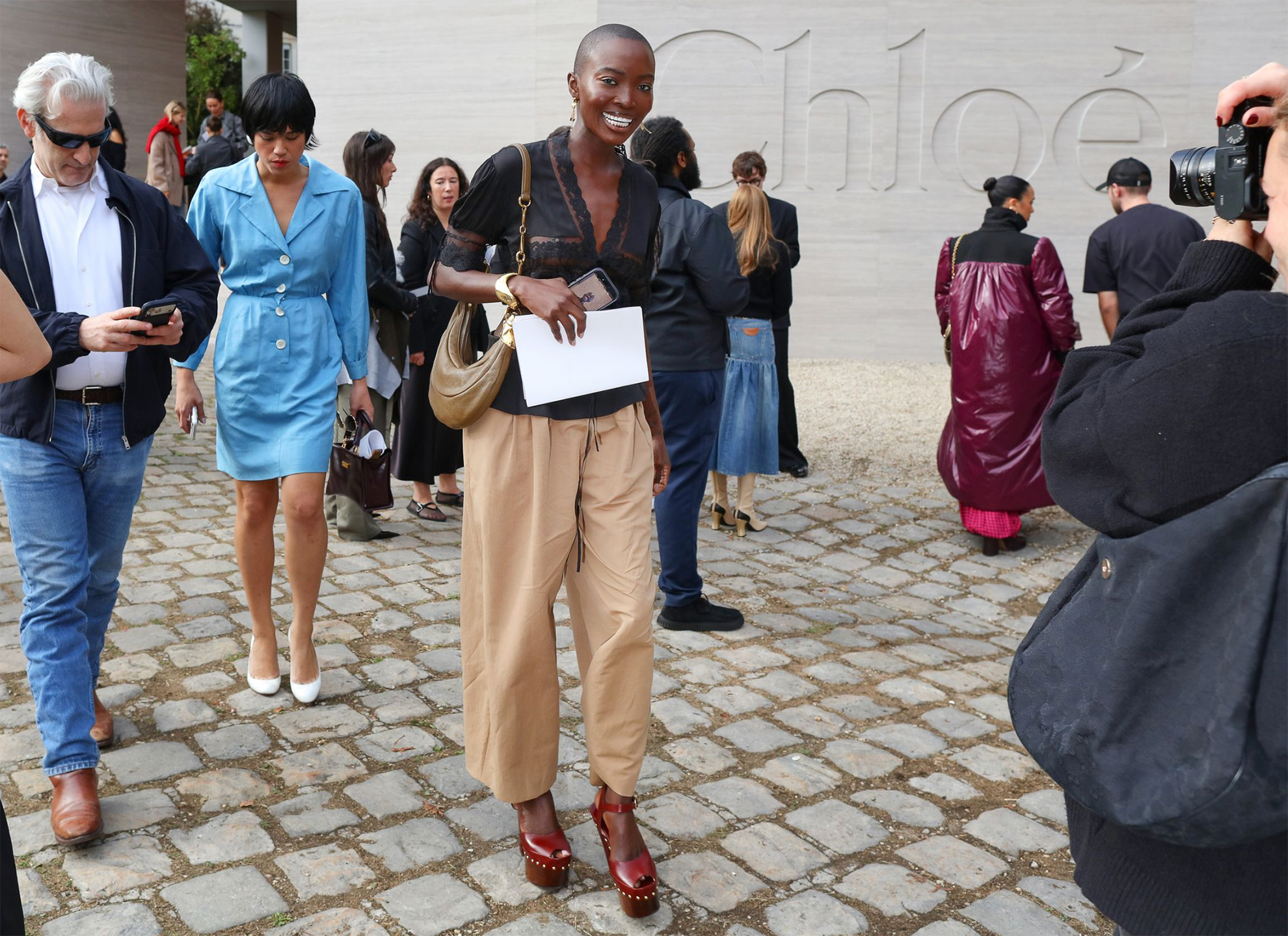
Two images from Paris make an uncomfortable pair. In one, a fashion-week attendee dresses to be seen. In the other, students gather to be heard. Both understand that appearance matters; only one group can reasonably expect its appearance to be treated as an achievement.
Paris, almost simultaneously: Another vision of the future, with fewer invitations and considerably more at stake.

Paris, almost simultaneously: Another vision of the future, with fewer invitations and considerably more at stake.

During the Spring/Summer 2027 shows, Saint Laurent sent gold beneath the Eiffel Tower, while Alessandro Michele brought Valentino into the Bibliothèque Sainte-Geneviève. Outside fashion’s arrangements, French students were protesting overcrowded classrooms, missing teachers and deteriorating schools; demonstrations were met with tear gas and arrests. Fashion had prepared next summer. Some of the teenagers were still trying to secure this autumn.

The temptation is to pronounce the whole thing obscene. But having spent much of my life in fashion, photography, publishing and design, I would be lying if I pretended that beautiful clothes suddenly become worthless when the world becomes ugly. People need pleasure, invention and the possibility of becoming someone they have not yet imagined. A dress does not have to repair a school to justify its existence.

What bothers me is the growing sense that fashion wants credit for understanding the world while arranging everything so that the world cannot interrupt it. There is a difference between giving people somewhere to dream and asking them to admire how efficiently you have avoided waking up.

The Safety Pin Passed Compliance

At ELASTE, post-punk and New Wave mattered to us because they opened possibilities. You could make a magazine, put a band together, invent an appearance, announce yourself before anyone had decided whether you deserved an audience. The clothes belonged to that larger permission to do things differently.

That is what gets lost when rebellion is reduced to its wardrobe. In the work of Vivienne Westwood, a safety pin could carry an insult to respectable taste. On a luxury accessory, it can carry an excellent margin. The object survives the journey beautifully; the attitude travels less well.

Of course punk was never outside commerce, and being young in the past did not make everyone interesting. The point is that something happened between making an appearance that challenged the terms of belonging and buying an appearance that certifies your membership. Luxury has become particularly skilled at selling the second with the language of the first.

Now collections arrive accompanied by resistance, community, identity and change. These words should make demands on the clothes and on the people producing them. Too often they merely make the press release harder to disagree with. Who wants to be against community?

This is where the distress lives: in the suspicion that fashion has become better at describing its importance than demonstrating it. Yet dismissing every collection before looking at it would be its own kind of laziness. And this season, two designers make that dismissal considerably harder.

Someone Brought the Billionaires

Hannah Rose Dalton and Steven Raj Bhaskaran call their label Matières Fécales: Fecal Matter in French. Their severe tailoring, altered bodies and unsettling beauty have made them conspicuous in an industry that routinely promises difference and then hires the same faces to demonstrate it. Their Fall 2026 collection, The One Percent, aimed its satire at extreme wealth.

For Spring/Summer 2027, they turned towards the other end of that arrangement. The 99% brought 99 models of colour beneath the Monument à la République, with clothing that included distressed tailoring and sari textiles shaped into couture volumes. In the finale, models carried lifelike figures representing billionaires on their backs.

An economic argument, with the weight distributed accurately.

It is theatre, obviously. But theatre can make a relationship visible that polite language keeps obscuring. Those bodies carrying those figures offer a much less flattering picture of wealth than luxury’s usual suggestion that everyone at the top simply climbed there in better shoes. The image asks who is doing the carrying.

The clothes deserve attention too. A silhouette can make a body appear powerful, strange, vulnerable or impossible to classify. When designers work seriously with those possibilities, the argument enters the garment rather than remaining something written beside it. Matières Fécales’ distorted elegance is compelling because its unease does not depend entirely on knowing the show’s title.

There is also a human consequence to casting. AnOther’s interview with the casting directors describes a closing model breaking down with happiness afterwards. That does not redistribute wealth, but it does complicate the claim that everything visible on a runway is empty. Being seen can matter enormously to someone accustomed to being excluded.

The teenagers protesting for better schools and the people walking this show are not interchangeable, and a runway cannot borrow the authority of a demonstration simply by occupying a public square. Still, here was fashion allowing the question of who belongs to disturb its picture of beauty. That deserves more than a cynical shrug.

The Trouble Came with a Production Budget

The backing matters. Matières Fécales is supported by Dover Street Market Paris under Adrian Joffe, president of Comme des Garçons International. That support includes development and production, giving the designers access to resources they previously lacked. This is more interesting than the familiar story of a corporation discovering that outsiders are fashionable.

Rei Kawakubo and Yohji Yamamoto made their Paris debuts in 1981, challenging established ideas of how clothes should fit, flatter and present the body. Their work could be spectacular, but the challenge existed in the construction: asymmetry, unexpected volume, space between cloth and skin. You could take away the runway and still have to confront the proposition.

That is a useful inheritance. Fashion does not become radical because a model looks angry or the soundtrack suggests the end of civilisation. It becomes radical when the clothes alter what people can imagine wearing, how a body can occupy space, or whose body is allowed to count as beautiful.

Joffe’s support suggests that an institution can do more than extract the attractive surface of dissent. It can also supply the factories, skilled labour and distribution that allow an idea to become an actual garment. Whether that possibility survives commercial pressure is an ongoing question, but declaring it dead in advance would erase precisely the distinction this industry needs.

Even the name deserves care. Dalton traces the French-language joke to the label’s origins. We should be wary of treating it as evidence of surrender. The shit has not disappeared. It has acquired an accent.

Selling Out Is Not the Same as Selling Clothes

There is an easy ending available: luxury absorbs its critics, the clothes sell, therefore the criticism was always another product. It is tidy, devastating and almost impossible for any working designer to escape. Fail commercially and your ideas were irrelevant; succeed and you have betrayed them. A wonderful arrangement for critics, less useful for anyone paying a pattern cutter.

WWD reported first-season sell-through of 70–80% in a number of stores, according to the brand. Those figures tell us that people bought the clothes. They cannot tell us whether buyers accepted the social commentary, ignored it or simply liked the jacket. A sales report is a poor instrument for measuring conviction.

Paris, almost simultaneously: Another vision of the future, with fewer invitations and considerably more at stake.

Paris, almost simultaneously: Another vision of the future, with fewer invitations and considerably more at stake.

The uncomfortable questions remain. Who can afford this rebellion? Can the people represented on the runway afford the objects representing them? How readily can a wealthy customer buy a critique of wealth and experience the purchase as proof of personal sophistication? Luxury has always offered ways to feel exceptional; moral exception can become another one.

But requiring designers to remain poor before taking their ideas seriously would turn hardship into our preferred aesthetic. The more useful test is what success permits them to do, and what it eventually persuades them to stop doing. Does the work become stranger, more exacting, more open to people previously excluded? Or does the troubling part slowly disappear while the recognisable look remains?

Fashion in distress is still capable of producing fashion that disturbs. That is the distinction worth keeping alive. The problem is the commercial comfort of an industry that can surround itself with urgent language while expecting very little urgency from its own behaviour.

I still want to see clothes that make me feel something beyond the wish to own them: curiosity, discomfort, recognition, the sudden pleasure of discovering that somebody has seen a possibility I missed. Matières Fécales does not settle the argument. It gives us a reason to keep looking.

Paris can accommodate a beautiful show and a difficult question. What fashion cannot afford is to keep mistaking the first for an answer to the second.
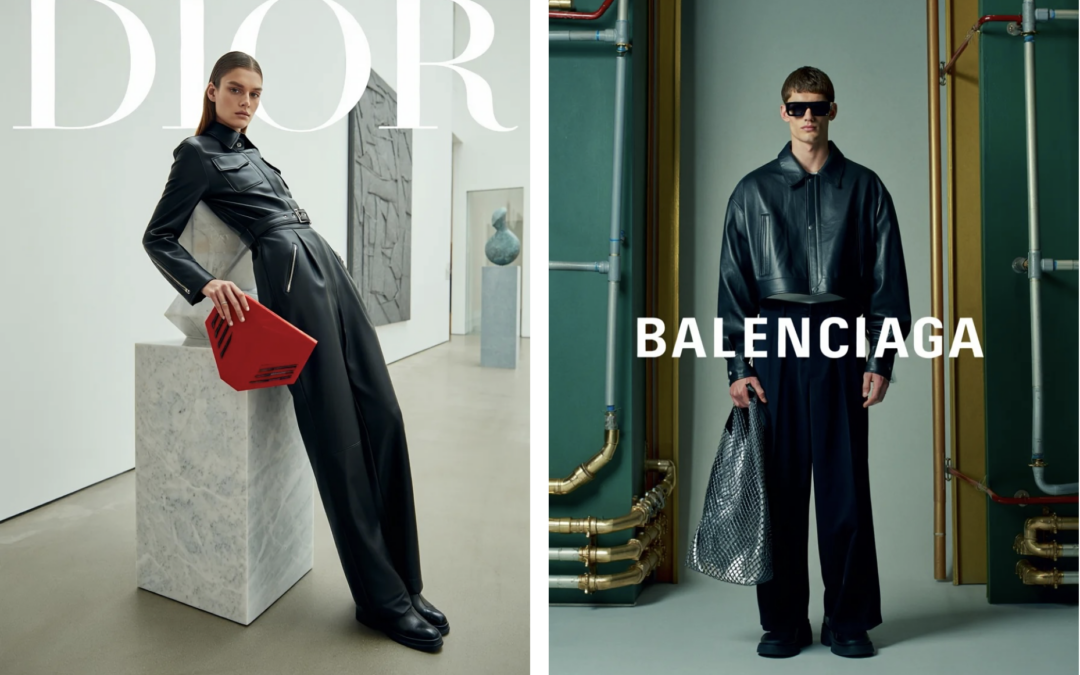
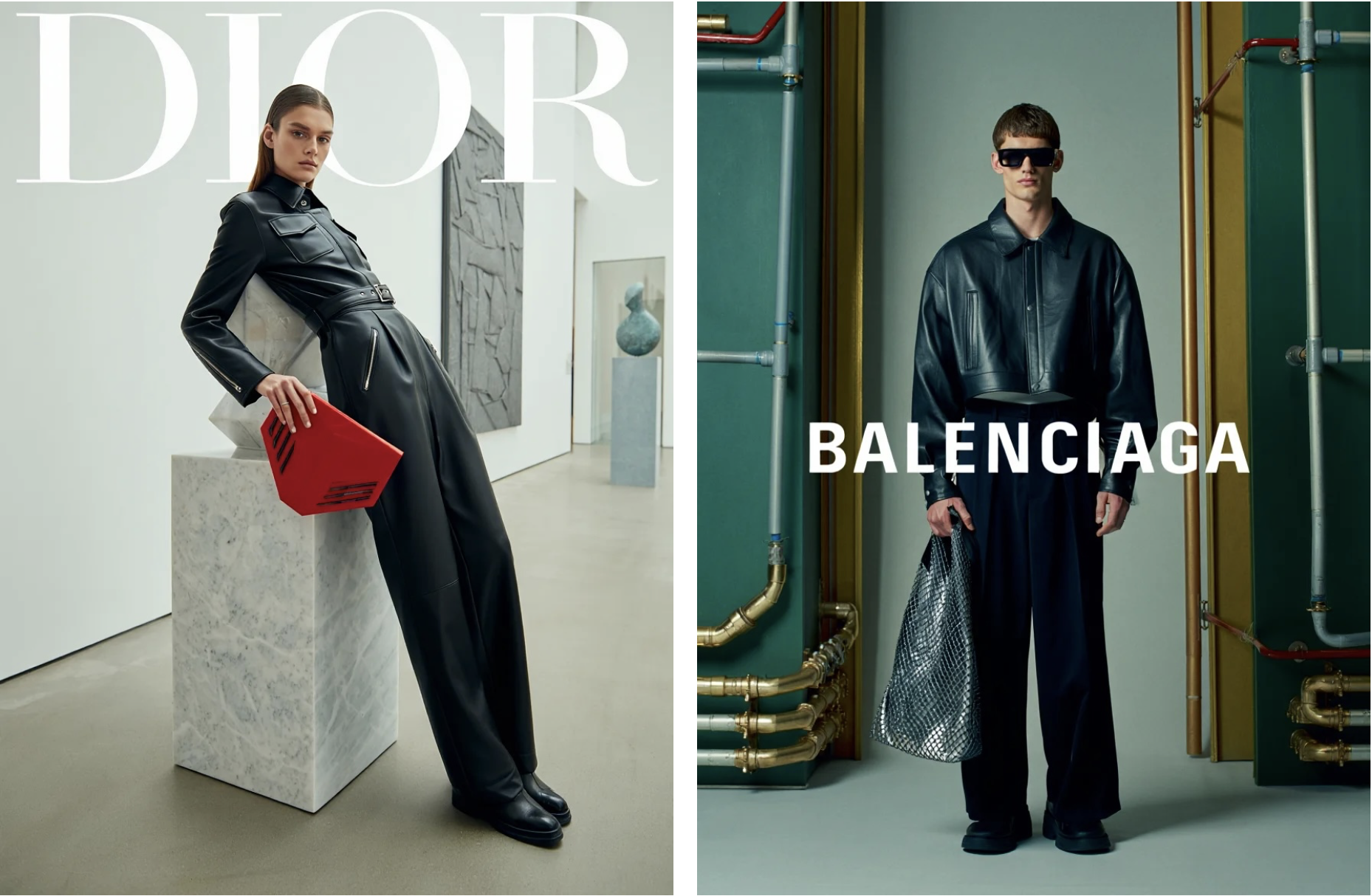
BEAUTY HAS NO COPYRIGHT

BEAUTY HAS NO COPYRIGHT

BEAUTY HAS NO COPYRIGHT

Who owns a beautiful face? AI Is About to Rewrite the Rules of Beauty

Fashion has always behaved as though it discovered beauty.

It didn't. It selected it, photographed it, named it, circulated it, priced it and eventually taught millions of people to recognize it.

The model was central to that machinery. A casting director saw something in a face. A photographer interpreted it. A magazine repeated it. A fashion house attached its clothes to it. Eventually, in exceptional cases, a face stopped being merely a face and became Linda, Naomi, Kate, Gisele.

Fashion spent decades turning faces into brands. AI is now asking whether the brand owns the face, the face owns the brand, or neither owns beauty at all.

Fashion spent decades turning faces into brands. AI is now asking whether the brand owns the face, the face owns the brand, or neither owns beauty at all.

Now AI is pulling that machinery apart, and the most interesting question may not be whether AI will replace models. That is the obvious question, which usually means it isn't the best one.

The better question is: what exactly is a model?

The Face Becomes Property

Fashion is already experimenting with an apparently sensible solution to one of AI's more obvious problems: give models ownership of their digital likeness.

H&M, for example, began creating digital twins of real models with the stated intention that the models themselves would retain rights to those twins and could license them elsewhere. The Business of Fashion has since reported the emergence of businesses specifically built around managing AI versions of human models. The model, in other words, is becoming both person and intellectual property portfolio.

This makes perfect sense. If a company scans a model today and then sends her digital twin to Paris, Tokyo and Mars for the next twenty years without the human being ever leaving her sofa, that model has created an asset. She should participate in its value.

But this apparently straightforward principle immediately opens a much stranger question.

What exactly does she own?

Her identity? Certainly. Her exact likeness? Probably. But then we enter more peculiar territory. Does she own her eyes? Her cheekbones? The distance between those eyes? The shape of her jaw? Her freckles? Or does ownership somehow emerge only when all those ingredients are assembled in precisely the right proportions?

Suddenly, copyright law has wandered into the casting session and started asking who owns the face.

Why Copy a Model When You Can Invent One?

The fascination of generative AI isn't creating a fake Bella Hadid. That's arguably one of the least imaginative things you can do with it. We have spent decades producing Kate Moss photographs. Producing an infinite number of synthetic ones hardly constitutes a creative revolution.

The far more interesting possibility is to take the qualities that make a face compelling, break them into language and begin again: eye spacing, orbital shape, cheekbone projection, jaw width, lip geometry, asymmetry, skin, age, expression, attitude.

Change one element and the face becomes ordinary. Change another and suddenly something happens.

Anyone who has spent enough time casting or photographing models knows this sensation. You look through hundreds of faces and one stops you. Often you cannot explain why. As a fashion photographer, I spent years looking for that face without completely understanding what I was looking for.

AI changes the relationship. Taste becomes experimental.

Generate. Alter. Reject. Return. Exaggerate. Reduce. Combine.

Why did that work? Why didn't this? What exactly did I see?

AI isn't merely generating a model. It allows us to interrogate why we thought someone looked like a model in the first place. The mysterious eye of the casting director suddenly has something resembling a laboratory.

That could become considerably more interesting than replacing a day rate.

Cindy, Kaia and the Problem With Owning Beauty

Consider Cindy Crawford and Kaia Gerber. Kaia is unmistakably related to Cindy. Nature has taken an extraordinarily recognizable face, shuffled its variables and produced another extraordinarily recognizable face.

Nobody would suggest that Kaia Gerber infringes Cindy Crawford's intellectual property.

Biology does variations. Culture does too.

There are surely numerous women walking around the world who occupy nearby coordinates in the enormous landscape of possible human faces. They may share the cheekbones, the eyes, the proportions, perhaps even the mole. None of them needed a license from an agency before being born.

This is where the idea of owning a face becomes slippery.

Perhaps what deserves protection isn't the face itself. It is the face once it becomes a sign.

Cindy Crawford isn't merely an arrangement of anatomical features. Neither is Bella Hadid. “Bella Hadid” contains decades of accumulated cultural information: CHANEL, Steven Meisel, Paris, magazines, campaigns, controversy, famous relationships, public breakups, paparazzi, Instagram, celebrity and fashion history.

Fashion took a human face and turned it into intellectual and commercial capital. That sign has value, and protecting it makes sense.

But protecting the ingredients from which it was constructed is another matter entirely.

Beauty has no copyright.

Fashion Never Invented From Nothing

The same confusion now surrounds AI and originality.

AI image-making is frequently criticized because models have learned from existing imagery. There are serious questions here about copyright, compensation, unauthorized reproduction and the commercial exploitation of artists. Those questions shouldn't be waved away merely because the technology is exciting.

But fashion should be particularly careful about pretending that creativity has historically occurred in some immaculate white room untouched by other people's work.

Fashion is an enormous reference machine. Designers reference designers, photographers devour photographers, stylists quote decades and creative directors raid archives with impressive confidence. Models arrive carrying echoes of previous models. Entire seasons are built around the rediscovery of something fashion had supposedly forgotten twelve years earlier, at which point everybody congratulates themselves on having discovered it.

Art isn't much cleaner.

Picasso absorbed other painters, movements, cultures and contemporaries relentlessly. Artists have always studied other artists partly by copying them. Photographers learned by looking at photographs. Designers learned by taking clothes apart. Musicians learned other people's songs. Writers read.

The interesting question was never whether something entered your visual vocabulary. Of course it did.

The question was what happened to it after it got there.

Perhaps the creative progression has always been:

Imitation → absorption → transformation → authorship.

AI hasn't invented that process.

It has made the process embarrassingly visible.

The Machine Can See Our References

This may be one reason AI makes the creative industries so uncomfortable. Human influence is conveniently invisible.

Nobody asks a photographer to disclose every Irving Penn photograph, Guy Bourdin advertisement, Renaissance painting, movie, album cover, stranger, lover, magazine and childhood memory that entered their brain before they pressed the shutter. We accept that this vast cultural compost has somehow been absorbed into something we dignify with the word taste.

A machine's influences, however, can theoretically be examined. Suddenly we can see the digestive system.

And because we can see it, we have begun questioning a process that culture previously romanticized when humans performed it.

That doesn't make every use of AI legitimate. Directly asking a machine to reproduce a living artist's recognizable work so that you don't have to employ that artist is fundamentally different from absorbing references and transforming them into something new. The technology doesn't abolish authorship simply because authorship was never as pure as we liked to imagine.

But the useful boundary isn't between influenced and uninfluenced.

Nothing interesting is uninfluenced.

The boundary is between imitation and transformation.

And fashion, of all industries, should understand the difference.

Photography Is Dead. Images Won.

Photography had already begun losing its monopoly long before generative AI arrived. Instagram merely accelerated the collapse.

The photographer, model, magazine, editor, publisher and audience once occupied clearly defined positions. Fashion imagery passed through an elaborate hierarchy before reaching the public. The photographer photographed. The model modeled. The magazine published. The audience looked.

That arrangement now seems almost quaint.

The model publishes. The audience photographs. The customer art-directs. The algorithm edits. The brand becomes a media company. The influencer becomes a retailer. The retailer becomes a studio. And increasingly, the image itself doesn't require a camera.

Photography didn't disappear.

Its borders did.

This is why saying Photography Is Dead isn't particularly pessimistic. Images won.

There are more images, made by more people, moving through more channels and performing more functions than at any point in human history. Photography was once the dominant industrial process for manufacturing them. It is now one process among many.

AI is simply removing another boundary: the requirement that an image must first have existed in front of a lens.

For photographers, that can sound existential. For images, it is liberation.

The Model After the Model

Fashion's first instinct will naturally be to recreate its existing world with the new technology. New tools usually spend their infancy impersonating old ones.

Digital models will wear digital clothes. Virtual try-on will place real clothes on synthetic representations of consumers. Real models will license digital twins. Brands will produce campaigns without flying thirty people, forty suitcases and one exceptionally nervous garment bag to Ibiza.

Much of that transition is already underway.

But that's merely using tomorrow's technology to reproduce yesterday's fashion system.

The more radical possibility is that AI changes the very idea of the model.

Why should there be one permanent face? Why should a campaign require the same human identity across every image? Why couldn't a face evolve with the story? Why couldn't age change? Why couldn't gender become ambiguous, ethnicity become deliberately difficult to place, proportions drift, beauty become stranger from one frame to the next?

Why couldn't beauty itself become a creative material?

For more than a century, fashion photographers manipulated light, pose, makeup, hair, film, lenses, printing, retouching and eventually Photoshop to construct an image of beauty while maintaining the useful fiction that the camera had simply found it.

The model was “naturally” beautiful after three hours of hair and makeup, carefully selected lighting, a $100,000 production, 600 exposures, one chosen frame and an enthusiastic encounter with retouching.

AI destroys that fiction.

There is no discovered beauty anymore. There is constructed beauty.

Perhaps there always was.

Looking Inside the Beauty Machine

That may be the genuinely revolutionary thing about AI fashion imagery. Not that it can make beautiful people who don't exist. Fashion has effectively been doing that forever.

The revolutionary part is that we can now manipulate the components of beauty with extraordinary precision and watch our own reactions.

Make the eyes slightly wider. Nothing. Alter the jaw. Worse. Introduce asymmetry. Interesting. Change the age.

Suddenly extraordinary.

The machine isn't merely generating faces. It is reflecting our preferences back at us.

And that could eventually become uncomfortable, because fashion may discover that the supposedly mysterious instincts behind casting, beauty and desirability aren't quite as mysterious as we imagined. Taste may contain patterns. Those patterns may contain prejudices. And once they can be generated, varied and measured at enormous scale, some of fashion's most carefully protected intuitions may begin looking suspiciously like data.

AI could expose biases alongside preferences. It could reveal which characteristics we repeatedly reward, which we reject, which combinations we describe as expensive, elegant, sexy, cool, strange or wrong, and how much supposedly individual taste has been culturally programmed.

That raises a much more provocative possibility.

For generations, fashion has insisted that beauty is subjective while operating enormous industries built on remarkably consistent judgments about it. Agencies cast. Magazines select. Brands approve. Algorithms now measure the response. Everyone insists there are no rules, yet somehow the same kinds of faces keep making it through the door.

AI may finally call fashion's bluff.

If millions of variations can be generated and our reactions to them observed, the machine may begin mapping something the industry has preferred to keep mysterious: the grammar of beauty itself.

Make Beauty Stranger

That doesn't mean there is one universal formula for a beautiful face. Quite the opposite. The interesting discoveries may occur where formulas fail, where an apparently “wrong” proportion suddenly produces fascination, where age improves rather than diminishes a face, where asymmetry creates character, where a feature conventional casting might reject becomes the entire reason an image works.

Beauty has always depended partly on deviation.

The perfect face can be remarkably boring.

And this is where AI becomes more interesting than the endless production of synthetic perfection currently flooding our screens. If we use it merely to manufacture smoother skin, larger eyes, smaller noses and infinitely compliant twenty-two-year-olds, we will have built one of the most powerful visual instruments in history and used it to automate a beauty filter.

Fashion can do better than that.

It can use the machine to make beauty stranger.

It can test the edges of attraction, elegance, age, identity and imperfection. It can construct faces that no casting director would have known to look for because no such person had yet walked into the room.

And perhaps, in doing so, it can learn something uncomfortable about the faces it has been selecting all along.

For an industry that has spent generations manufacturing beauty while claiming merely to recognize it, that is a far more interesting disruption than whether the next campaign was photographed with a Hasselblad or generated on a computer.

AI isn't just giving fashion another way to make images.

It is giving fashion a way to examine its own gaze.

And once we can see how the beauty machine works, we may never look at a beautiful face quite the same way again.

The Frivolancer Economy

The Frivolancer Economy

The Frivolancer Economy

When Fashion Ran Out of Attention

There was a time when becoming a fashion influencer looked suspiciously like escaping work.

You dressed well, went somewhere photogenic, photographed yourself holding something expensive and gradually converted the performance of having a desirable life into an occupation. The product was ostensibly fashion, but the real product was aspiration. The handbag, hotel, sunglasses and impossible breakfast were props in a larger transaction: I have access to this life; perhaps you could too.

It was an extraordinarily successful business model. So successful, inevitably, that everybody copied it.

Fashion influencers now compete not only with one another but with brands, celebrities, retailers, publications, resale platforms, paid UGC, professional clipping operations and an expanding ocean of synthetic content. The problem is not that attention has disappeared. The supply of things demanding it has exploded, while the number of hours in a human day has stubbornly refused to increase.

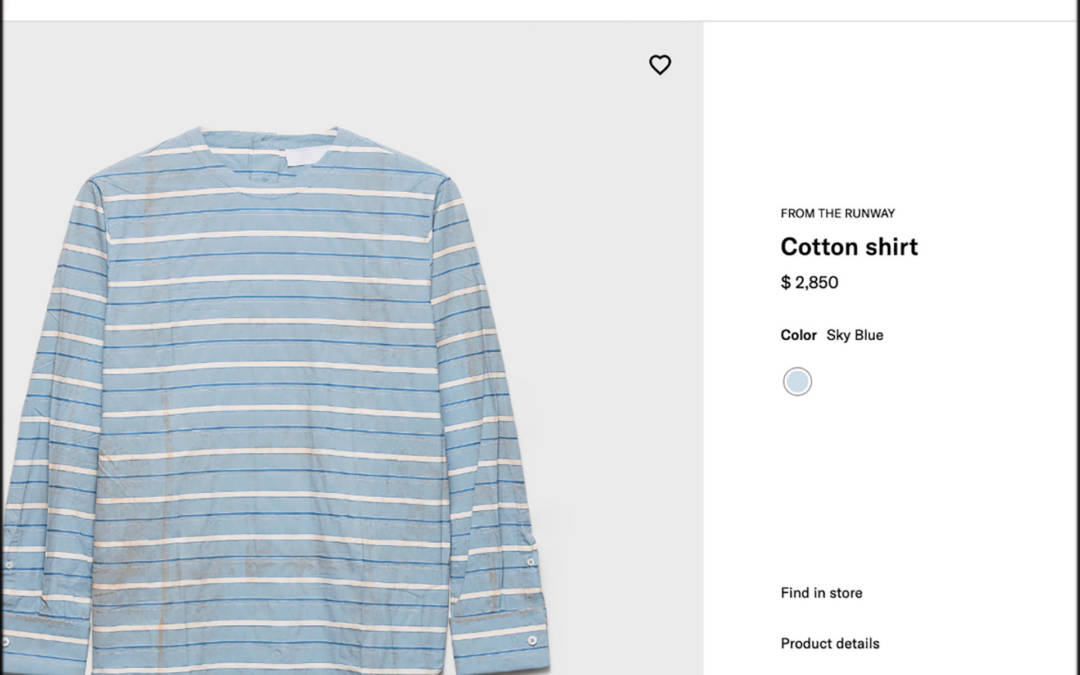
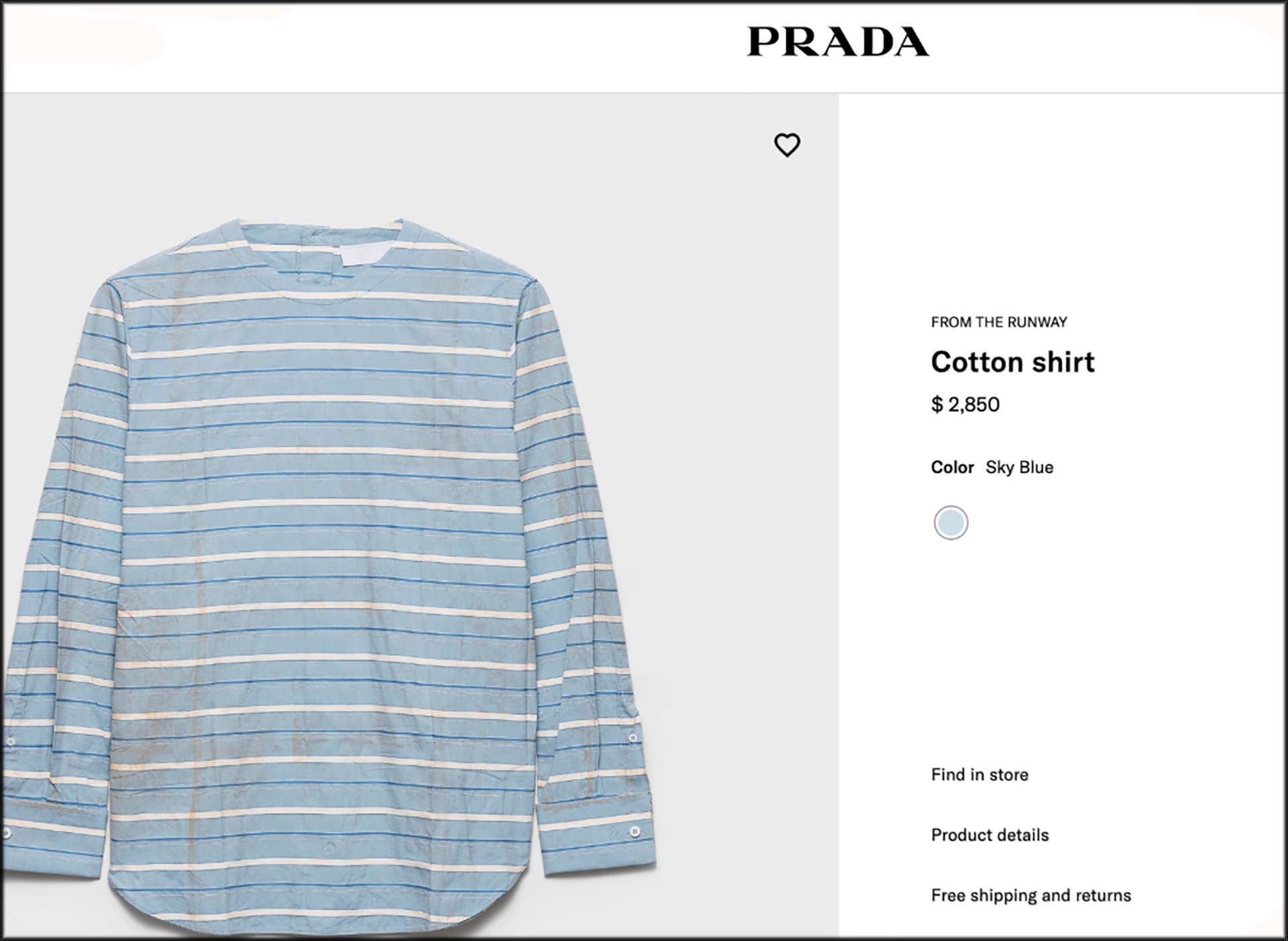
A soiled-looking Prada cotton shirt, yours for $2,850. Rage bait, trolling, greedflation, bad taste, attention seeking, or simply price itself as luxury strategy?

A soiled-looking Prada cotton shirt, yours for $2,850. Rage bait, trolling, greedflation, bad taste, attention seeking, or simply price itself as luxury strategy?

The influencer economy has discovered the same uncomfortable law that fashion itself knows very well: abundance destroys distinction.

And so the frivolancer has had to evolve.

The Frivolancer Grows Up

We coined frivolancer some time ago for a particular creature of contemporary fashion culture: someone whose apparent occupation consists largely of being photographed attending, wearing, unboxing, holidaying and lunching.

But the word has become more interesting because the frivolancer's job is becoming considerably less frivolous.

Rebecca Jennings’s recent New York Magazine article, “You Can’t Just Be Showing Matcha-Pilates-Alo,” follows Audrey Peters, a 29-year-old New York lifestyle influencer who built her audience around luxury fashion, from CHANEL shopping trips to HERMÈS appointments, and has since become an unusually candid practitioner of strategic rage bait. Through Peters, Jennings describes an influencer economy undergoing something resembling a labor-market correction.

Peters herself is a fascinating case because she understands this perfectly. Luxury fashion remains her territory, but the familiar material has stopped performing as it once did. A trip to CHANEL that could once attract millions of views might now attract a fraction of that. Even she admits to being bored with watching yet another influencer unbox a Birkin.

This isn't necessarily the death of luxury. It may be the death of luxury as reliable content.

There are simply too many Birkins on the internet.

That creates a peculiar predicament. The frivolancer was hired to make us want things. Now she increasingly has to make us feel something about them.

Admiration will do.

Desire is better.

But anger works surprisingly well.

From Aspirational to Irrational

Rage bait sounds like the opposite of luxury marketing.

Luxury spent decades controlling every pixel of its image. The lighting was exquisite. The model was exquisite. The shop was exquisite. The advertising existed in a hermetically sealed universe in which nobody had mortgages, grocery bills or irritating neighbors.

Social media punctured the membrane.

Fashion discovered that a ridiculous object can travel farther than a beautiful one. An absurd price can generate more attention than an elegant campaign. Something doesn't necessarily need to be desirable anymore. It needs to be discussable.

This produces a fascinating new category of fashion object: the product that functions simultaneously as merchandise and media.

A roughly $3,000 Prada shirt that appears dirty, discussed in the video that prompted this article, doesn't have to persuade millions of people to buy it. Almost none of them will. It only needs to make millions of people ask the obvious question:

Who the hell would pay $3,000 for that?

The price has become part of the content.

And here the frivolancer economy collides with something we've been watching for much longer: the financialization of fashion.

The Price Is the Message

Luxury prices used to communicate fairly legible things. Better materials. Craftsmanship. Provenance. Exclusivity. Status. Sometimes simply an expensive brand name sewn into a relatively ordinary object.

Those explanations have become increasingly inadequate.

The modern luxury price can perform several jobs simultaneously.

A higher price protects scarcity. It separates luxury from an increasingly sophisticated mass market capable of producing aesthetically convincing alternatives. It raises margins. It strengthens the perception of investment value. It reassures existing owners that their purchases belong to an appreciating universe rather than a depreciating wardrobe.

But now price can do something else.

It can generate attention.

The outrageous price becomes a marketing asset in its own right.

A $300 shirt may pass unnoticed. A $3,000 shirt that looks as though someone repaired a motorcycle in it becomes a story. People screenshot it. Creators discuss it. Comment sections ignite. Publications write about it. People who would never voluntarily watch a Prada campaign suddenly participate in Prada's cultural circulation.

Whether the brand deliberately engineered the object as rage bait almost becomes irrelevant. The attention economy has learned how to use it as rage bait anyway.

That changes the economics of outrageous fashion.

The question is no longer merely whether enough customers will buy the product to justify its existence. Its absurdity can create a secondary return through attention.

The price itself has become media.

Luxury's Inflationary Spiral

This gives the extraordinary inflation of luxury prices another possible meaning.

We've previously looked at fashion's transformation from an industry selling beautiful things into one increasingly governed by the logic of assets: scarcity, controlled distribution, resale values, investment narratives and relentless price escalation.

But financialization and the attention economy may now be reinforcing each other.

Raise the price and the product becomes more exclusive.

Raise it further and it becomes scarce.

Raise it further still and it becomes news.

At some point, economic irrationality acquires marketing value.

That doesn't mean every luxury price increase is a cynical attempt at rage bait. That would be far too neat. The more interesting point is that several systems which once operated separately are beginning to overlap.

Scarcity creates desire. Financialization encourages price escalation. Price escalation creates outrage. Outrage creates engagement. Engagement creates visibility. Visibility reinforces cultural importance. Cultural importance helps justify the price.

The snake has discovered a remarkably profitable way of eating its own tail.

And influencers sit conveniently in the middle of the loop.

When the Birkin Stops Working

This may explain something that initially looks contradictory.

Luxury goods remain extraordinarily potent status objects, yet luxury content can feel exhausted.

The distinction matters.

A Birkin can remain desirable precisely because relatively few people can obtain one while simultaneously becoming boring online because we've seen thousands of them. Physical scarcity can coexist with digital abundance.

That is a strange new problem for luxury.

The object is scarce.

The image of the object is infinite.

For years, influencers solved this by giving audiences access to otherwise inaccessible worlds. Come shopping with me at Chanel. Come to Paris Fashion Week. Come to the hotel. Come to the fitting. Come watch me open the box.

But eventually we came.

Again and again and again.

Jennings describes precisely this erosion of aspirational luxury content. Peters says the shopping videos that once generated millions of views have weakened considerably, while audiences have become less receptive to endless displays of free PR, designer purchases and privileged lifestyles.

The industry's response is telling. If aspiration no longer guarantees attention, provocation might.

The frivolancer therefore begins mutating from professional aspirational person into professional reaction generator.

The Rage Bait Trap

There is, however, an obvious problem with an economy built on provocation.

It suffers from exactly the same mechanism that destroyed the previous one.

Everybody learns the trick.

Once creators discover that outrage performs, feeds fill with outrage. Once brands discover that strange products attract attention, strange products multiply. Once deliberately ugly fashion becomes culturally legible, ugliness itself becomes conventional.

The shocking thing develops the same problem as the beautiful thing.

There is too much of it.

Rage bait therefore contains its own obsolescence. Every escalation raises the threshold required for the next reaction. Yesterday's ridiculous handbag becomes today's mildly eccentric handbag. Yesterday's outrageous price becomes today's luxury baseline.

The attention arms race has nowhere comfortable to end.

And fashion, perhaps more than any other industry, should recognize the danger. Fashion depends on novelty, but novelty is difficult to manufacture when everyone is manufacturing novelty simultaneously.

The Algorithm Is the New Editor

The old fashion system had gatekeepers. Editors decided what appeared in magazines. Buyers decided what appeared in stores. Designers and creative directors attempted to establish what came next.

The algorithm has no taste.

It has feedback.

That distinction may be one of the most consequential changes in contemporary fashion culture.

A magazine editor could decide that something deserved attention. An algorithm largely observes that something is receiving attention and gives it more.

The difference rewards reaction.

Beautiful can work. Intelligent can work. Original can work. But anger, disbelief and correction have a structural advantage because they compel participation.

The frivolancer understands this because her livelihood depends upon understanding it.

Jennings's article is striking in how little romance remains around the profession. Brands scrutinize engagement rates. Influencers monitor link clicks. Campaigns are judged against conversions. Peters describes deliberately using curiosity and price to generate clicks. What appears from the outside to be someone casually sharing her life increasingly resembles a tiny performance-marketing company with a human face.

The frivolancer has KPIs now.

How terribly corporate.

Fashion After Influence

And then comes the most amusing turn of all.

After years spent turning bloggers into influencers, the influencer economy is rediscovering writing.

Jennings describes renewed interest in newsletters and Substack because smaller audiences who intentionally subscribe can be more engaged and commercially useful than enormous populations of people who happen to encounter someone in a feed. The fashion industry is beginning to value not merely reach but attention with intent.

In other words, after optimizing photographs, videos, Stories, Reels, TikToks, unboxings, hauls and rage bait to survive ever-shorter attention spans, the industry has stumbled upon a revolutionary new technology:

People who actually want to hear from you.

Perhaps that is where the influencer recession becomes genuinely interesting.

The influencer isn't disappearing. Influence is being repriced.

A million followers who barely notice you may be worth less than a much smaller group who deliberately seek you out. Visibility isn't the same as relevance. Engagement isn't necessarily affection. And outrage, despite producing wonderful graphs, isn't loyalty.

Fashion may be rediscovering the difference between an audience and a crowd.

The Frivolancer Recession

So perhaps the frivolancer isn't dying either.

She is being forced to acquire a point of view.

That may prove uncomfortable for an industry that spent years demonstrating that personality could itself be industrialized. Find the right apartment. The right Pilates class. The right restaurant. The right bag. The right holiday. The right filter. Repeat until monetized.

But formulas are vulnerable to success.

Once everybody knows how to manufacture aspiration, aspiration becomes generic. Once everybody understands rage bait, outrage becomes wallpaper. Once everybody becomes an influencer, influence itself becomes scarce.

Which returns fashion to a surprisingly old-fashioned proposition.

Make something worth looking at.

Say something worth reading.

Have an idea that cannot be reproduced merely by copying the format.

The frivolancer economy was built on the fantasy that attention could be converted endlessly into money. Its recession reveals the flaw in the model. Attention isn't infinite, and the amount of content fighting for it increasingly is.

Luxury fashion has responded with scarcity, financialization, escalating prices and, whether deliberately or accidentally, products capable of functioning as rage bait. Influencers have responded by becoming ever more strategic about provoking, measuring and converting attention.

Both may eventually encounter the same problem.

When everything is engineered to get our attention, not giving it may become the ultimate luxury.

When Luxury Hits the Beach

When Luxury Hits the Beach

When Luxury Hits the Beach

Vamos LouBouBou

I wasn’t looking for an editorial. I was looking for a pair of flip-flops. Five minutes later I was questioning the economics of luxury, admiring the design, remembering product experiments from twenty years ago, and sketching ideas for a sandal collection of my own.

Ideas rarely arrive politely. They usually arrive arguing with you.

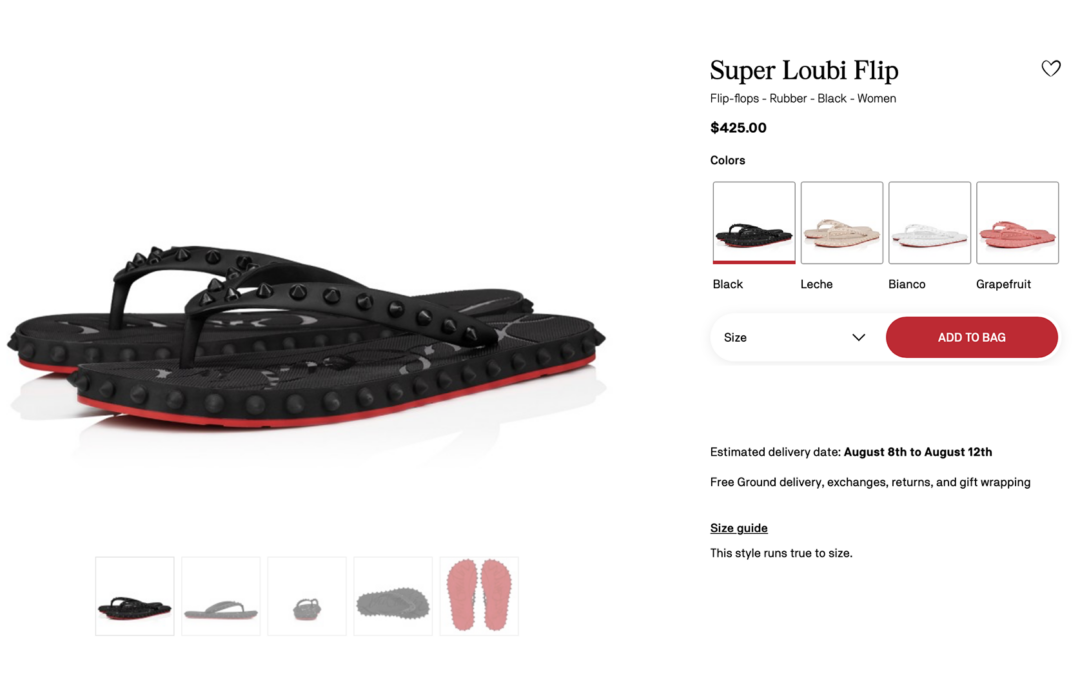
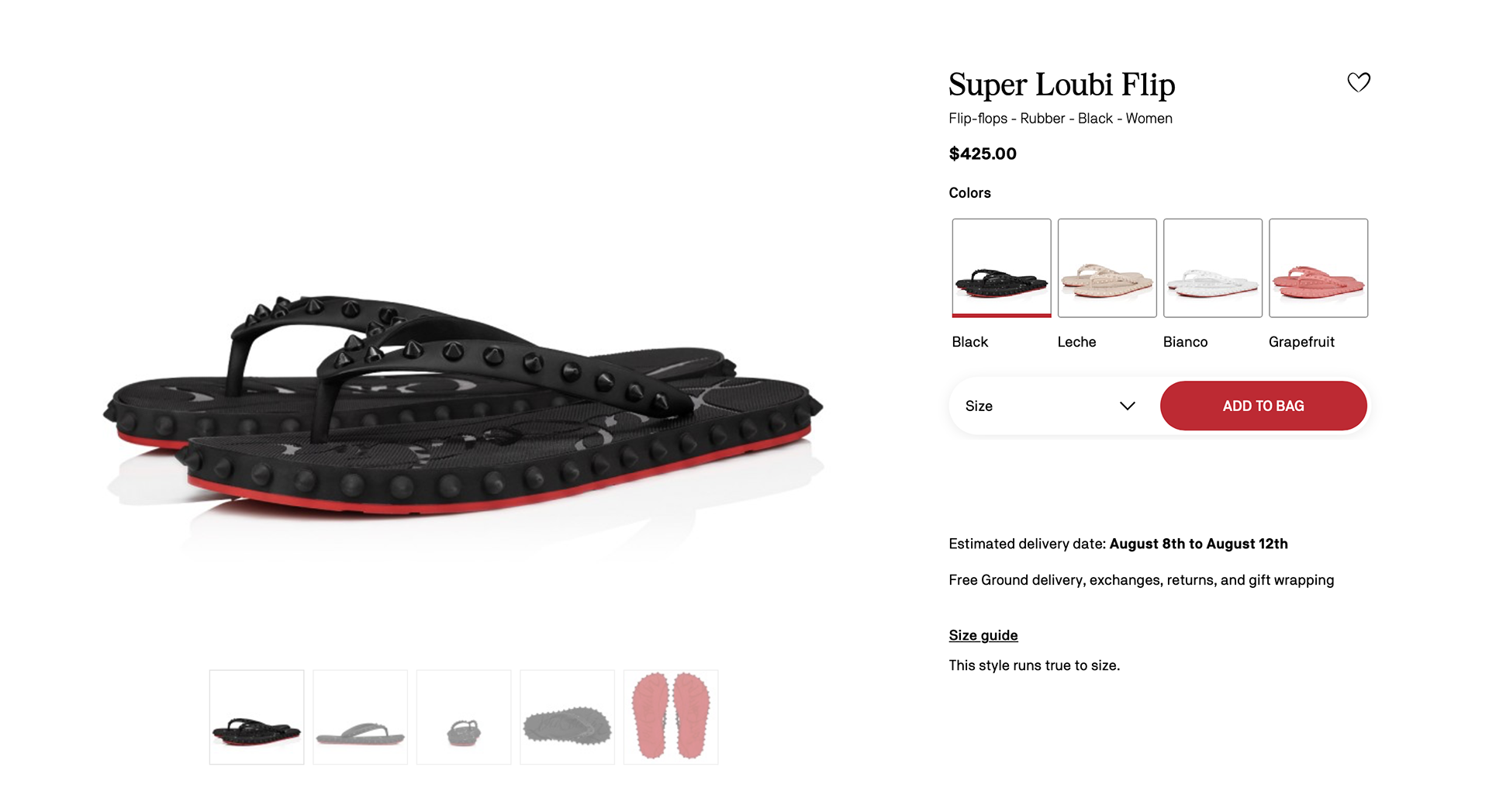
That argument began with a pair of Christian Louboutin rubber flip-flops carrying a price tag of more than $400. My first reaction was predictable. “This is absurd.” My second reaction surprised me. “They’re actually quite cool.”

Luxury spent a century convincing us to climb into stilettos. Now it charges $425 to climb back into flip-flops.

Luxury spent a century convincing us to climb into stilettos. Now it charges $425 to climb back into flip-flops.

That’s the fascinating thing about luxury. It bypasses rationality and goes straight to desire. If people bought these because the rubber was objectively better, Christian Louboutin would be competing with Havaianas.

They aren’t buying rubber. They’re buying participation in a story. That distinction explains far more about modern luxury than any balance sheet ever could.

The Most Democratic Shoe on Earth

The flip-flop occupies the absolute bottom of fashion’s hierarchy. It’s the shoe of beaches, swimming pools, hostels, backpackers, gardeners, and convenience stores. It asks almost nothing of its owner. It doesn’t promise status. It promises comfort. Or at least it used to.

Luxury has spent the last two decades performing a remarkable reversal.

Sneakers became luxury. Hoodies became luxury. T-shirts became luxury. Baseball caps became luxury. Now even the humble flip-flop has crossed the velvet rope.

Luxury spent a century climbing upward. Now it’s charging hundreds of dollars to climb back down. That sounds absurd. So does the product. Yet both are true.

The Story Is Worth More Than the Rubber

Ironically, I don’t dislike the sandal at all. Quite the opposite. It’s an intelligent piece of design.

Rubber is inexpensive. Injection molding is inexpensive. Metal studs cost very little. The tooling probably represents the largest investment. None of that matters.

Someone looked at one of the simplest products ever invented and asked a wonderfully uncomfortable question: Why should only leather have a monopoly on luxury?

That’s good design thinking. The real innovation isn’t the sandal. It’s convincing the market that a beach flip-flop deserves the same psychological shelf space as a CHANEL bag. That isn’t manufacturing. That’s mythology.

Luxury’s New Currency

For generations, luxury justified itself through craftsmanship, rarity, and precious materials. Those things still matter. But they’re no longer enough. Today, luxury increasingly creates value by changing how we perceive ordinary objects. The material remains ordinary. The meaning becomes extraordinary.

A rubber sandal doesn’t become expensive because rubber improved. It becomes expensive because attention became scarce. In an economy where almost everything can be copied, manufactured, or delivered tomorrow, perception has become the most valuable raw material of all.

Perhaps branding has quietly become applied mythology.

From Louboutin to LouBouBou

Luxury brands spend decades building immaculate worlds. Consumers dismantle them in a weekend. Within minutes, I had already renamed the sandal: LouBouBou.

Labubu. Different product. Same mechanics. Hype, scarcity, collectability, and a price that somehow becomes part of the entertainment.

That's the pattern.

Luxury Is a Conversation

This little encounter reminded me why I find luxury endlessly fascinating.

I can question the economics. Admire the design. Laugh at the mythology. Respect the branding. And still walk away inspired. The best products don’t simply ask whether you’ll buy them. They ask whether they’ll change the way you see the world.

Sometimes they even send you back to the drawing board. Ten years ago I experimented with rubber combined with metal details for accessories. Looking at these sandals brought those memories rushing back.

Somewhere between ridiculous and brilliant is usually where the next idea is waiting. The beach hasn’t changed. Only the admission price has.

Vamos a la playa.

I Thought the Future Would Be Cooler

I Thought the Future Would Be Cooler

I Thought the Future Would Be Cooler

Why Nothing Feels Cool Anymore

There is a song by the American band Yacht called I Thought the Future Would Be Cooler. It was released more than a decade ago, long before artificial intelligence, TikTok, algorithmic shopping, and large language models quietly rearranged the cultural furniture of everyday life. At the time, it read like a clever piece of indie irony. Today, it feels uncomfortably literal.

Not because the future failed to arrive.

But because it arrived looking suspiciously like everything else.

We were promised rupture. Flying cars, immersive virtual worlds, creative liberation at planetary scale. A technological age that would multiply individuality rather than smooth it out. Instead, we got a world that feels eerily consistent from city to city: the same café aesthetic, the same apartment staging, the same hotel lobby lighting, the same fonts, the same curated imperfection that somehow always feels professionally approved.

The future did not disappoint us.

It standardized us.

Somewhere along the way, it stopped surprising us and became exceptionally good at repetition.

The Great Flattening

Walk through almost any fashionable district in the world and a strange déjà vu sets in. The café has the same poured concrete counter. The boutique sells the same oversized linen shirt. The hotel lobby smells like a memory you never actually had but somehow recognize. The branding is always restrained, the palette always earthy, the ceramics always artisanal, the soundtrack always drifting between ambient electronica and carefully nonchalant indie.

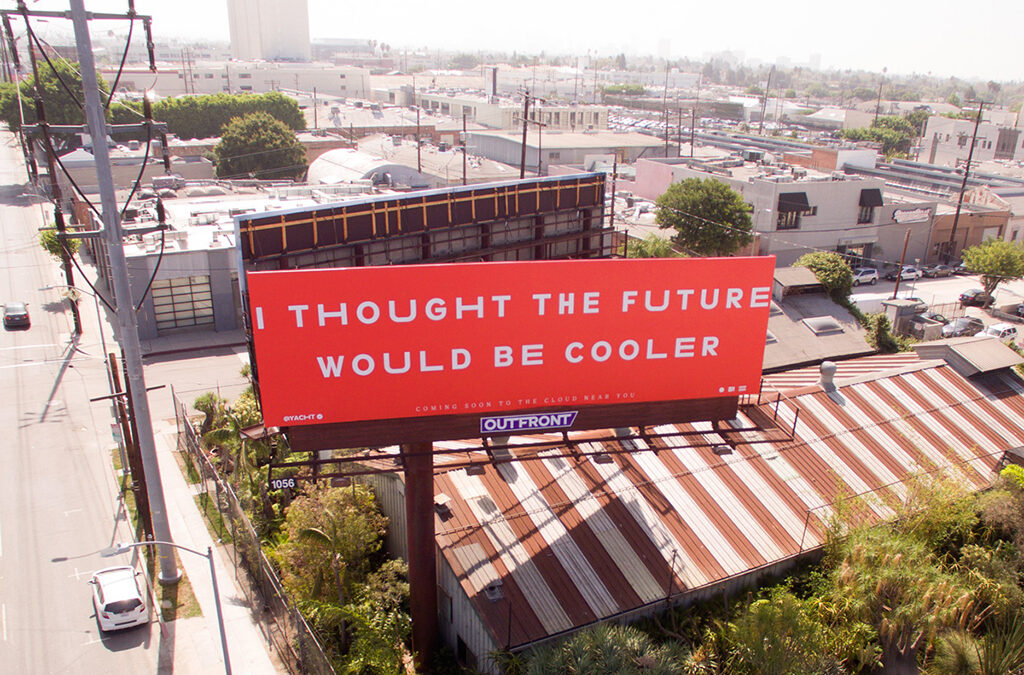
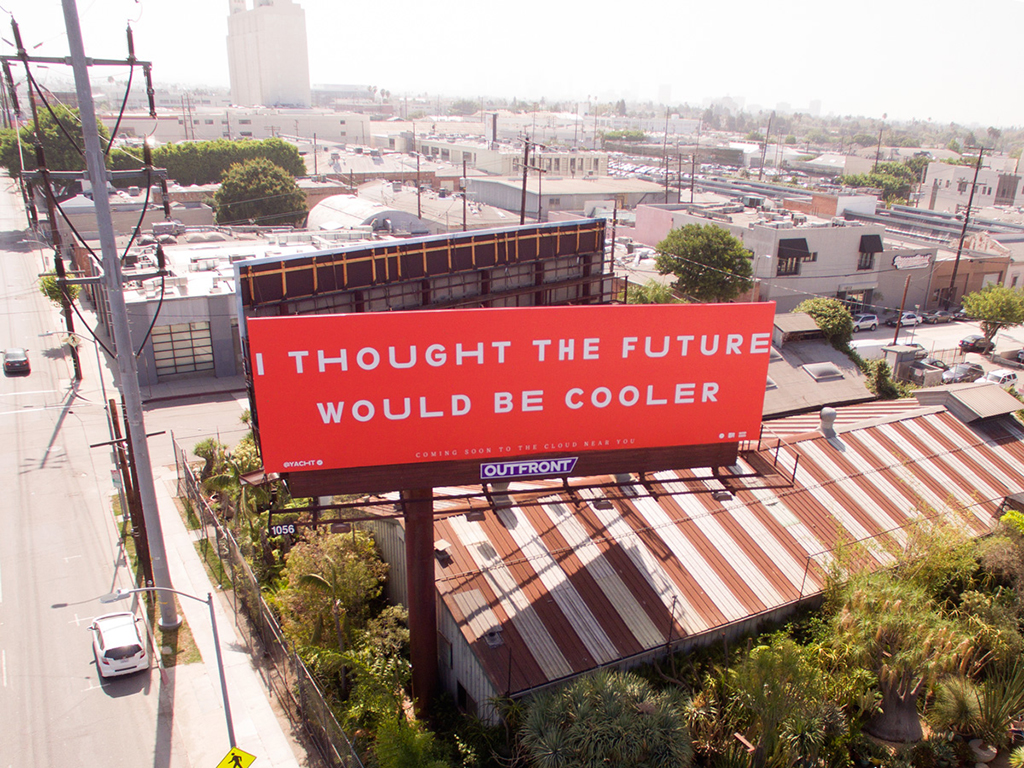
A witty urban billboard reads “I thought the future would be cooler,” capturing the gap between our futuristic expectations and everyday modern reality.

A witty urban billboard reads “I thought the future would be cooler,” capturing the gap between our futuristic expectations and everyday modern reality.

You have seen this place before.

Not because you travel too much.

But because everywhere has started to resemble everywhere else.

Cool used to be geographically anchored. It had an accent, a context, a sense of origin. You went to Tokyo for Tokyo, to Milan for Milan, to Copenhagen for Copenhagen. Difference was the point.

Now difference is just a variation in export settings.

The internet promised infinite cultural diversity. What it delivered instead was convergence at scale. Algorithms do not reward originality; they reward recognizability with minor deviation. They prefer the familiar slightly reassembled, the known gently rebranded.

So a design language born in Copenhagen becomes a hotel in Dubai, which becomes a café in Bangkok, which loops back into Stockholm as “Japanese-inspired minimalism with Mediterranean warmth.” Every reference is real. The combination is not.

Everyone is borrowing from everyone else until nobody remembers who started the conversation.

Global culture has become one enormous Pinterest board.

This is wonderful. It is also exhausting.

Global culture has become a single, endlessly replicated mood board that no one remembers assembling.

The Slop Economy

Every technological revolution begins with democratization. Photography, publishing, video, music production, design tools, distribution platforms—each wave lowers the barrier to entry and expands the number of people who can participate in cultural production.

This is, in almost every sense, a triumph.

It is also where things become interestingly overwhelming.

When creation becomes frictionless, output becomes infinite. And when output becomes infinite, quality stops being the differentiator. Competence becomes the baseline. Everything is well lit, well designed, well edited, and, increasingly, indistinguishable.

The internet is now saturated with what can only be described as competent excess: work that is technically correct, aesthetically fluent, and emotionally forgettable.

Not because people have become less talented. There may be more talent than ever. But much of it draws from the same references, responds to the same incentives, and ultimately converges on the same ideas.

This is the Slop Economy—not as an insult, but as a structural condition. A world where supply has expanded faster than attention, and where the median quality of everything has quietly converged toward “good enough to scroll past.”

When everything is possible, nothing feels necessary.

The Copy Machine Became Instant

Originality used to enjoy a brief, almost romantic delay. A new idea would appear, circulate slowly, mutate locally, and only then be absorbed into the mainstream.

That delay is gone.

Today, success is immediately legible and instantly reproducible. A handbag goes viral and is reverse-engineered within days. A visual identity gains traction and is replicated across continents before the original brand has finished its next campaign cycle. A TikTok aesthetic emerges and is industrialized before it has even stabilized into something coherent.

Even cultural discovery has become a form of real-time extraction.

Platforms do not just distribute ideas; they disassemble them. Meta’s ad libraries, TikTok analytics, and e-commerce dashboards turn creativity into a transparent system of inputs and outputs. What once required intuition can now be reverse-engineered.

The result is a strange acceleration: the lifecycle of originality has collapsed. It no longer has time to mature before it is cloned, optimized, and reissued as variation.

Success has become a template.

And templates, by definition, are meant to be copied.

AI Doesn’t Invent Culture

Artificial intelligence complicates this further, not because it is radically creative, but because it is structurally conservative.

It predicts. It averages. It interpolates. It produces the most statistically probable version of whatever you ask for.

Which makes it extraordinarily powerful—and culturally cautious.

AI is not a generator of rupture. It is a generator of consensus. It compresses the past into a smooth, optimized present. It is, in many ways, the perfect machine for a world already addicted to familiarity.

But culture does not evolve through consensus.

It evolves through deviation.

David Bowie was not an average of his time. Martin Margiela was not an optimization of existing fashion logic. Comme des Garçons did not emerge from customer research. The first iPhone was not the most likely phone—it was, in many ways, the least predictable one.

The uncomfortable truth is that cultural breakthroughs often look wrong before they look inevitable.

Prediction systems struggle with this because they are trained on what already exists. Culture, at its most interesting, is what refuses to exist until it does.

Consumers Graduated

There is another shift happening quietly in parallel: the audience has become far more literate than most brands are prepared to acknowledge.

Luxury used to operate on opacity. It relied on distance, mystique, and controlled information. Today, that distance has collapsed. Consumers know production costs. They understand supply chains. They watch factory breakdowns on YouTube. They compare materials, margins, and marketing strategies with the fluency of analysts.

Entire subcultures now exist to decode the mechanics of branding itself.

The customer, in effect, has completed a crash course in how everything is made.

And once you understand how the illusion works, it becomes harder to be impressed by it.

Luxury Was Never About Leather

One of the most persistent misunderstandings in luxury is the belief that value begins with material quality. It does not. Materials matter, of course, but they are only the most visible layer of a much deeper structure.

Luxury is accumulated meaning.

It is architecture, photography, typography, service, language, scarcity, timing, cultural memory, and above all, consistency. It is the slow construction of a world that feels internally coherent enough to justify belief.

The object is never the point.

It is the entry ticket.

People do not buy luxury products because they need them. They buy them because they want access to a narrative that feels more intentional than the everyday world around them.

The World Is the Product

This is where many contemporary brands misread the moment. They continue to think in terms of products when the real competition is between worlds.

Apple does not sell devices. It sells a controlled environment of interaction. Patagonia does not sell jackets. It sells a moral and ecological worldview. Hermès does not sell bags. It sells continuity across generations. LEGO does not sell plastic bricks. It sells structured imagination.

In each case, the object is secondary. The system around it is primary.

The strongest brands are not catalogues. They are places you can mentally inhabit.

The Return of Taste

For a long time, we outsourced taste to systems that promised efficiency. Streaming platforms decided what we listened to. Feeds decided what we saw. Recommendation engines decided what we discovered. Gradually, curation became invisible, and invisibility made it feel neutral.

But something is shifting again.

As algorithmic environments become more saturated with synthetic sameness, personal judgment begins to reassert itself as a form of distinction. Not loud opinion, but considered selection. Not endless consumption, but deliberate refusal.

Taste, in this context, is not about preference. It is about resistance to overexposure.

And in a world of infinite options, restraint becomes a signal.

Human Is Becoming Luxury

The next phase of cultural production may invert many of the assumptions of the last decade.

Machine-generated content will become effectively free. Human attention, judgment, and editorial clarity will become expensive.

Everyone will be able to produce. Very few will be able to decide what is worth producing.

Everyone will publish. Few will edit.

Everyone will generate. Few will curate.

In that environment, the most valuable creative act may not be addition, but subtraction. Not producing more, but refusing to contribute to noise.

When the world can generate millions of images before breakfast, choosing not to add another becomes a form of taste in itself.

What This Means

This is ultimately where the conversation about luxury becomes more interesting than luxury itself.

Luxury today is not just craftsmanship or heritage or design excellence. It is navigation through abundance.

It is the ability to recognize coherence in a landscape defined by replication. It is understanding why resale exploded, why dupes became inevitable, why AI reshapes aesthetics, why financial markets transformed fashion into assets, and why consumers increasingly value intelligence over aspiration.

The brands that will matter in the next decade will not simply look more expensive. They will feel more legible in a world that is becoming harder to interpret.

More coherent. More intentional. More unmistakably human.

Which brings us back to that song.

I Thought the Future Would Be Cooler.

Perhaps the mistake was assuming “cool” would survive optimization.

The future did not become less interesting.

It became more efficient.

And efficiency, as it turns out, has a peculiar aesthetic consequence: everything improves, and everything begins to resemble everything else.

In that sense, originality is not disappearing.

It is becoming harder to sustain.

Not because it is impossible.

But because it is no longer automatically protected by time.

In the age of infinite sameness, cool has not vanished.

It has simply become something you have to notice before it gets optimized away.