
Pop-Ups: The Store That Discovered It Was Better to Die Young
There was a moment in New York, somewhere around the middle of the 2000s, when shops began behaving strangely.
They appeared overnight in empty storefronts, warehouses and forgotten corners of downtown. There might be clothes inside. There might be art. There might be a party. There was often no particularly convincing sign. And just when you had figured out what the place was, it disappeared.
I was living in New York when pop-up fever began spreading through fashion, and I remember the idea feeling genuinely new. Not revolutionary in the French sense, perhaps, but revolutionary enough for retail: what if the cleverest thing you could do with a store was close it?
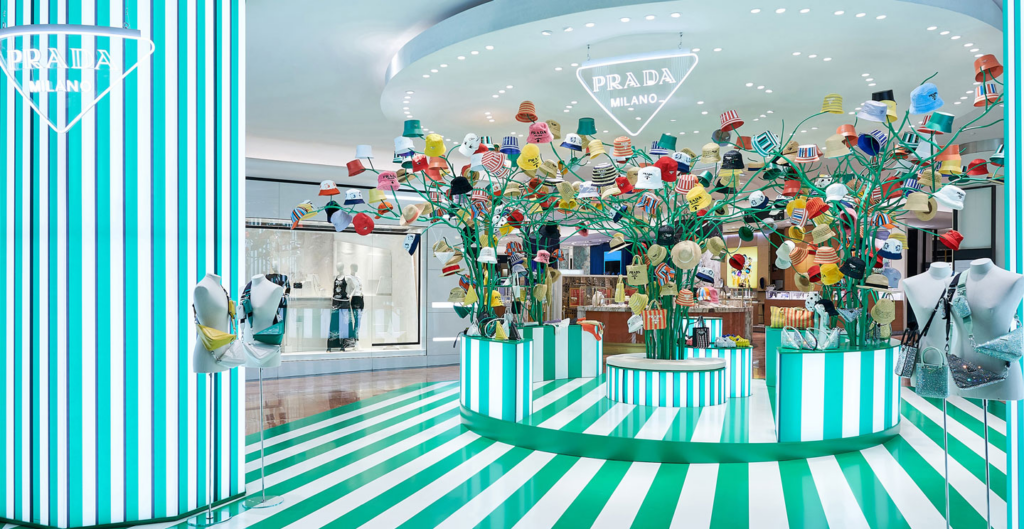
When the store becomes more collectible than the collection.
This was before Instagram, before every coffee shop had a “moment,” before immersive experience became something marketing departments said without embarrassment.
The pop-up was retail with an expiration date.
And that expiration date turned out to be extremely good for business.
Before the Pop-Up Became a Pop-Up
Temporary commerce, of course, is ancient. Markets, fairs, bazaars, Christmas stalls and traveling merchants had been appearing and disappearing for centuries. Humans understood scarcity long before marketing consultants discovered PowerPoint.
But the modern fashion pop-up was something different.
It wasn't temporary because it had to be.
It was temporary because temporary was cool.
The decisive moment came in 2004, when Rei Kawakubo's COMME DES GARÇONS opened its first Guerrilla Store in Berlin. It occupied a former bookshop away from the conventional luxury-shopping circuit. The old interior was largely left alone, the renovation budget was reportedly only about $2,500, and the store came with a deliciously irrational rule: it would close after a year even if it was successful.
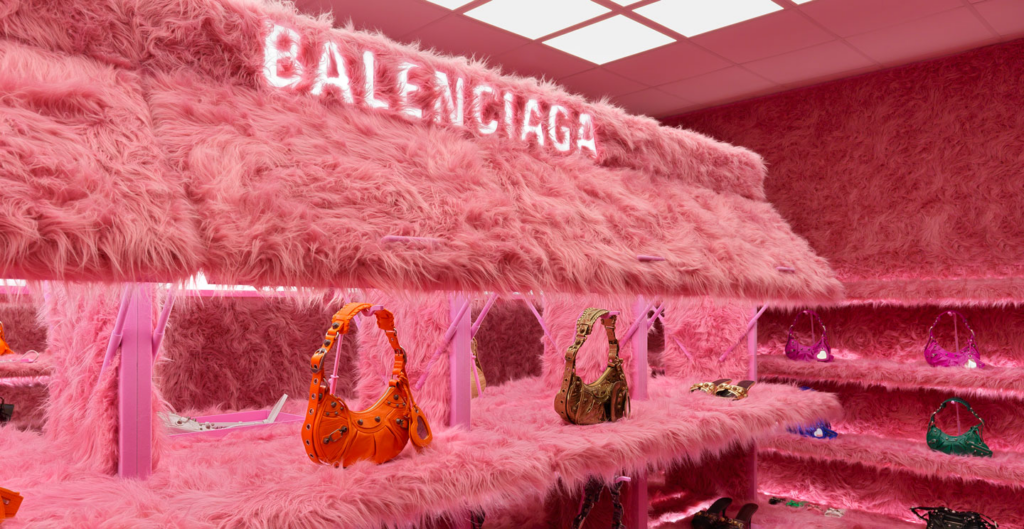
Subtlety was apparently not invited.
Think about how radical that was.
Luxury retail had spent decades perfecting permanence. Marble. Brass. Monumental staircases. Addresses that sounded like inherited titles. A flagship was supposed to announce: WE ARE HERE.
COMME DES GARÇONS said: WE'RE HERE FOR A BIT. FIND US.
The Guerrilla Stores subsequently appeared in cities including Barcelona, Stockholm, Warsaw, Singapore, Athens, Beirut and Reykjavík, generally occupying marginal or unexpected locations rather than conventional luxury districts. Advertising was deliberately limited. Interiors could remain raw. Word of mouth did much of the work.
It was anti-retail retail.
Naturally, retail loved it.
Then New York Caught the Virus
By roughly 2005, I remember temporary retail becoming part of the New York fashion conversation.
The timing was perfect. Downtown Manhattan still had enough odd spaces to make discovery possible, fashion was becoming increasingly intertwined with nightlife and art, and the Internet was powerful enough to spread a rumor but not yet powerful enough to tell you everything before you arrived.
That distinction matters.
You could still discover things.
A strange shop on an unfamiliar block had information value. You went inside because you didn't already know precisely what was inside.
The pop-up borrowed something from New York nightlife too. The best clubs had always understood that accessibility was the enemy of desire. A difficult door, an obscure address, a party you heard about from somebody who heard about it from somebody else: inconvenience could manufacture value.
Retail simply stole the velvet rope.
By 2009, the experiment had become an epidemic. Vogue was writing about the proliferation of pop-ups as Gucci prepared a sneaker project with Mark Ronson in New York, Rachel Roy planned a temporary SoHo store, Stella McCartney popped up for three days in East Hampton, eBay briefly occupied East 57th Street, and Prada opened a five-month temporary boutique in Paris.
The guerrillas had been joined by the imperial army.
Luxury Discovers That Rent Can Be Content
This is where the pop-up became much more interesting than a temporary shop.
Brands realized they weren't renting retail space.
They were renting attention.
A conventional store has a terrible marketing problem: tomorrow it will still be there.
A pop-up arrives with its own headline.
NOW OPEN.
Immediately followed by:
CLOSING SOON.
Retail had accidentally invented a machine that created both novelty and scarcity.
The store became campaign, billboard, press release, event venue, product launch, party backdrop, social currency and, somewhere toward the bottom of the list, a place where one could purchase a handbag.
That hierarchy would become increasingly important.
The heavy hitters understood early that modern consumers crave exclusivity and surprise, and nothing delivers that quite like a limited-time boutique that might be gone tomorrow. Louis Vuitton, Dior, Chanel, Gucci, Prada, Hermès and Fendi all learned to treat temporary retail as a form of brand theatre. Their pop-ups were not merely smaller versions of permanent boutiques. They were tightly edited worlds, built around a single idea, a capsule collection, a collaboration or a city-specific fantasy.
A handbag available everywhere is merchandise.
A handbag available for eleven days in a temporary shop in Tokyo that your friend discovered before you did is suddenly a cultural achievement.
Same bag.
Better mythology.
Louis Vuitton has repeatedly turned temporary spaces into architectural statements, from monogrammed installations to immersive exhibitions and city-specific launches. Dior has used pop-ups to transform its codes into elaborate environments of flowers, toile, stars and couture-scale spectacle. Gucci has made the temporary boutique feel like a travelling extension of its eccentric universe, mixing fashion, art, music and collectible objects. Prada, meanwhile, has always understood the power of a controlled, slightly surreal environment in which the product feels less displayed than staged.
These brands elevated the pop-up from retail tactic to performance art. The store became a set, the customer became part of the cast and the purchase became a souvenir of having entered the scene at precisely the right moment.
The Store Becomes a Stage Set
Then social media arrived and poured gasoline on the concept.
The early pop-up wanted you to find it.
The next generation wanted you to photograph yourself finding it.
Walls became backdrops. Mirrors acquired slogans. Giant handbags appeared. Flowers multiplied. Neon proliferated with alarming speed. Somewhere, inevitably, there was a chair nobody was supposed to sit on.
The pop-up had evolved from guerrilla retail into content architecture.
This wasn't necessarily a bad thing.
Physical retail had spent years worrying that e-commerce would kill it. Instead, e-commerce liberated the store from having to behave entirely like a store.
You could buy the product online.
So what was the physical space for?
Drama.
A temporary shop could do what a permanent store often couldn't justify. Build something absurd. Occupy an abandoned garage. Install a giant sculpture. Sell one capsule. Invite a chef. Host a DJ. Stay for four days. Leave.
Tommy Hilfiger eventually took the format almost literally on the road. For the 2011 Prep World project, the brand constructed a Cape Cod-style beach cottage in New York's Meatpacking District, opened it for only four days, then moved the concept through cities including London, Stockholm, Los Angeles, Madrid and Milan.
A store had become touring entertainment.
Retail was starting to look suspiciously like rock and roll.
The most extravagant examples now feel closer to temporary architecture than conventional shopping. In Shanghai, Louis Vuitton has staged launches on boats and floating platforms, turning the Huangpu River into a moving storefront and the skyline into a backdrop. A customer is no longer simply entering a boutique; they are boarding the brand.
Elsewhere, the format has become deliberately playful. Prada has created temporary cafés and patisseries around its visual language. Louis Vuitton has explored pop-up cafés and chocolate boutiques where monogrammed packaging becomes part of the collectible. Fendi has brought its Roman glamour into temporary bars, beach clubs and hospitality spaces. Gucci has turned ice cream, cocktails and souvenirs into extensions of its fashion universe. Even the humble ice cream shop can become a luxury campaign when the walls, uniforms, flavours, packaging and queue have all been styled as one coherent fantasy.
The product may be a handbag, a sneaker, a lipstick or a scoop of gelato.
The real product is the story people tell about having been there.
FOMO, Now Available in Several Sizes
Of course, underneath all the creativity sits one of capitalism's oldest buttons:
You can't have this forever.
Pop-ups compress desire.
A normal shop allows deliberation. You can think about it. Come back Saturday. Check the website. Ask your friend. Have lunch.
The pop-up whispers:
Saturday? Darling, we may no longer exist.
Suddenly procrastination becomes expensive.
Limited editions intensify the effect. A product available only in a particular city, collaboration or temporary location carries a little certificate of participation. You didn't merely buy it.
You were there.
This is particularly potent in luxury, where the object has never been the entire product. Access, knowledge, timing and belonging are part of the package.
The pop-up simply makes that machinery visible.
A Dior beauty pop-up might offer a limited shade, a personalised service and a room designed for photographs. A Chanel installation might turn a fragrance launch into a black-and-white cinematic set. A Gucci boutique might combine a capsule collection with a café, a DJ and a wall of objects that exist mainly to be photographed. The customer is not just shopping for a product. They are collecting evidence of proximity.
That is the genius of the modern luxury pop-up. It makes exclusivity feel physical.
Then Everybody Popped
Inevitably, an idea invented partly as an escape from standardized retail became standardized retail.
Fashion popped.
Beauty popped.
Sneakers popped.
Restaurants popped.
Artists popped.
Technology popped.
Streaming services popped.
Brands that barely existed popped up to announce that they existed.
Brands with thousands of stores opened temporary stores to experience the thrill of pretending they didn't.
And somewhere along the way, the phrase POP-UP EXPERIENCE became capable of describing almost anything involving a vacant room, three vinyl decals and a beverage sponsor.
Such is the lifecycle of every good cultural idea.
First the outsiders invent it.
Then fashion discovers it.
Then luxury perfects it.
Then marketing industrializes it.
Then somebody puts a QR code on it.
The difference is that the best luxury brands still understand the importance of restraint. A truly effective pop-up does not throw every idea into one room. It chooses a world and commits to it. The styling has to be precise, the product edit narrow, the service choreographed and the exit inevitable.
Opulence works best when it feels temporary enough to be dangerous.
The Sustainability Problem
Pop-ups are frequently presented as a lighter, more sustainable alternative to conventional retail, and sometimes they genuinely can be.
Existing spaces can be reused. Fixtures can be modular. Brands can test demand before committing to permanent locations. Independent designers can meet customers without financing a cathedral of marble.
But temporary does not automatically mean sustainable.
Build an elaborate interior for fourteen days, fly staff and products around the world, manufacture mountains of branded installation material and throw half of it away afterward, and the environmental halo becomes rather faint.
A sustainable pop-up has to be designed to disappear intelligently.
Reuse the space.
Reuse the furniture.
Reuse the materials.
Move the installation.
Leave as little behind as possible.
The original COMME DES GARÇONS guerrilla idea suddenly looks remarkably contemporary again: spend very little, alter very little, use what is already there, create cultural value rather than decorative landfill.
Sometimes the future of retail looks suspiciously like Berlin in 2004.
And Now We Have the Internet
The strangest thing about the pop-up is that e-commerce should have killed it.
Instead, e-commerce made it stronger.
The Internet gave us infinite shelves, infinite opening hours, infinite comparison and infinite convenience.
Which also means it removed something shopping used to provide naturally:
the accident.
You search for a black handbag online and the algorithm gives you black handbags.
Efficient.
Useful.
Deadly boring.
Walk through a city and encounter a strange temporary store you didn't know existed, and something entirely different happens. Curiosity interrupts intention.
You enter without knowing exactly what you're looking for.
That is an increasingly rare commercial condition.
And perhaps a valuable one.
The irony is that the more digital shopping becomes, the more extravagant the physical interruption can be. A boat in Shanghai, a Dior garden, a Louis Vuitton café, a Gucci ice cream shop, a Prada installation in a former industrial space: these places do not compete with the Internet by offering more inventory. They compete by offering something the Internet cannot quite reproduce.
A sense of arrival.
The Permanent Power of the Temporary Store
Twenty years after those early guerrilla experiments, the pop-up is no longer a novelty. It is part of the basic grammar of modern retail.
But the best ones still retain a trace of the original idea.
They don't simply sell.
They interrupt.
They occupy an unexpected place, create a temporary world, invite people inside and disappear before familiarity has time to become indifference.
That is why the pop-up survives every retail apocalypse announced on LinkedIn.
It understands something permanent stores occasionally forget:
shopping should occasionally be fun.
Not frictionless.
Not optimized.
Not personalized by an algorithm that has been following you around the Internet since Tuesday.
Fun.
A little unpredictable. A little theatrical. Slightly unnecessary.
You walk around a corner.
Something is there that wasn't there yesterday.
You go inside.
Maybe you buy a purse.
Maybe you eat an ice cream beneath a giant logo, board a boat dressed as a boutique or stand in line for a product that will be impossible to find next week.
And then it vanishes.
That is not bad retail.
That is show business.